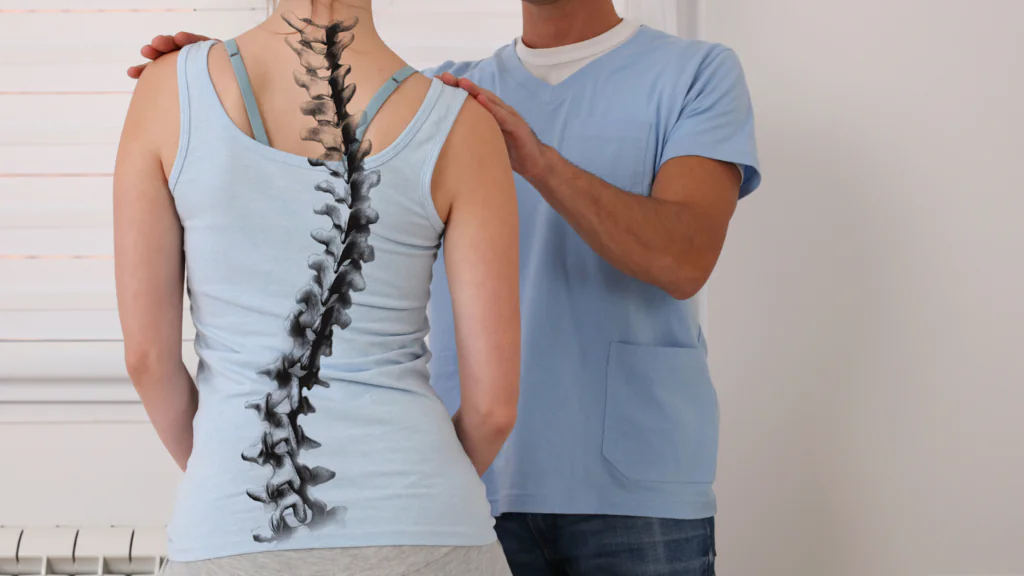
Scoliosis is a condition that affects the alignment of the spine, causing it to curve sideways rather than remaining straight. While many people think of scoliosis as a single condition, it actually comes in several forms, each with its own causes, characteristics, and treatment considerations. Understanding the different types of scoliosis and what leads to them can help patients and families recognize symptoms early and seek the right care.
Scoliosis can develop during childhood, adolescence, or adulthood, and the severity of the spinal curve can range from mild to severe. In some cases, the condition progresses slowly and causes little discomfort, while in others it may lead to noticeable posture changes, pain, or breathing issues. By learning about the various types of scoliosis and their underlying causes, individuals can better understand how the condition develops and how it can be managed.
What Is Scoliosis?
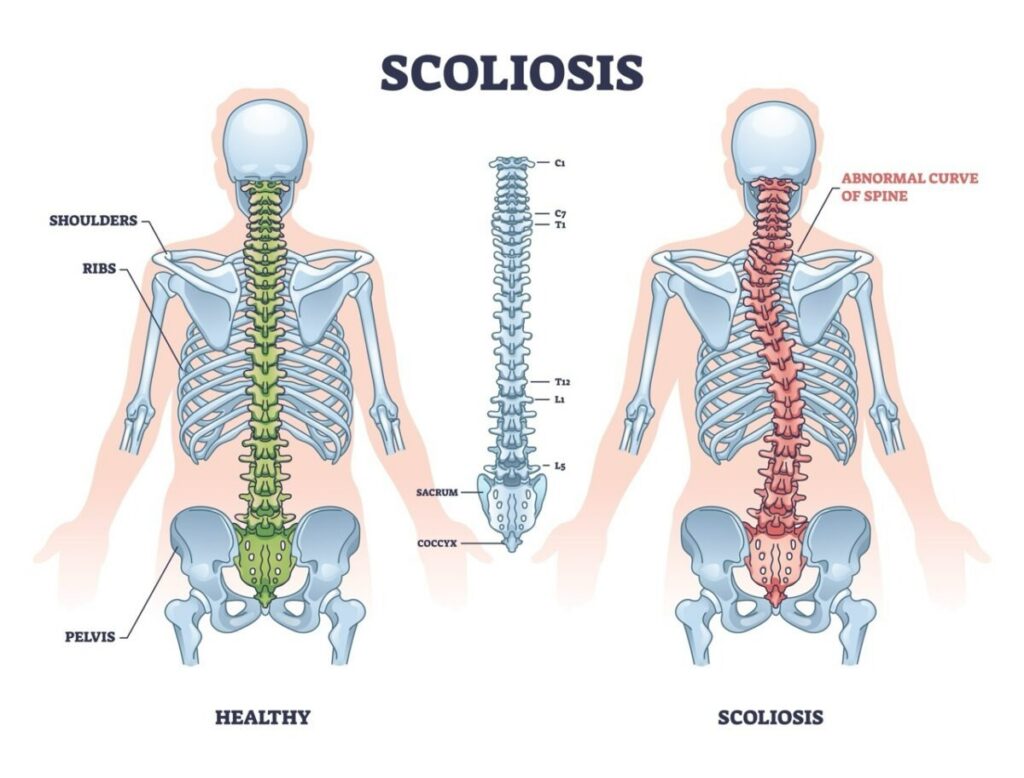
Scoliosis is defined as an abnormal sideways curvature of the spine measuring more than 10 degrees. When viewed from behind, a healthy spine appears straight. However, a person with scoliosis may have a spine that forms an “S” or “C” shape.
In addition to the sideways curve, scoliosis often involves rotation of the vertebrae, which can cause uneven shoulders, an uneven waistline, or one shoulder blade appearing more prominent than the other. In more severe cases, the rib cage may shift or protrude due to the spinal rotation.
The condition can affect people of all ages, but it most commonly appears during periods of rapid growth, particularly during adolescence. Although scoliosis is often discovered during school screenings or routine physical exams, some individuals may not realize they have it until symptoms develop later in life.
Common Signs and Symptoms of Scoliosis
While symptoms can vary depending on the severity of the spinal curve, several physical signs are commonly associated with scoliosis. These include:
- Uneven shoulders
- One shoulder blade that sticks out more than the other
- Uneven hips or waistline
- A visible curve in the spine
- One leg appearing longer than the other
- Leaning slightly to one side when standing
Some individuals may also experience back pain, muscle fatigue, or stiffness. In severe cases, scoliosis can affect lung capacity or lead to breathing difficulties due to the compression of the chest cavity.
Early detection is important because treatment options are often more effective when the condition is identified before the curve becomes severe.
The Main Types of Scoliosis
Scoliosis is classified based on its cause and when it develops. Although the spinal curve may look similar across different cases, the underlying causes can vary significantly.
The four main types of scoliosis include:
- Idiopathic scoliosis
- Congenital scoliosis
- Neuromuscular scoliosis
- Degenerative scoliosis
Each type has distinct causes, risk factors, and treatment approaches.
Idiopathic Scoliosis
Idiopathic scoliosis is the most common type, accounting for approximately 80–85% of all scoliosis cases. The term “idiopathic” simply means that the exact cause is unknown.
Although doctors have studied idiopathic scoliosis extensively, no single cause has been identified. However, research suggests that genetics, growth patterns, and hormonal factors may contribute to its development.
Idiopathic scoliosis is further categorized based on the age when it appears.
Infantile Idiopathic Scoliosis
This form develops in children younger than three years old. It is relatively rare and occurs more frequently in boys than girls.
In some cases, the curve may correct itself as the child grows. However, other cases may progress and require medical monitoring or treatment.
Juvenile Idiopathic Scoliosis
Juvenile scoliosis occurs between the ages of four and ten. This form is less common but has a higher risk of progression because children still have significant growth remaining.
Regular monitoring is typically recommended to ensure the curve does not worsen.
Adolescent Idiopathic Scoliosis
Adolescent idiopathic scoliosis is the most common type overall. It develops between ages 10 and 18, often during rapid growth spurts associated with puberty.
Girls are more likely than boys to develop curves that require treatment.
Although the exact cause remains unclear, several possible factors include:
- Genetic predisposition
- Abnormal spinal growth
- Hormonal influences
- Imbalance in muscle development
- Nervous system factors
Because adolescence is a period of rapid growth, curves can progress quickly if not treated early.
Congenital Scoliosis
Congenital scoliosis is present at birth and occurs due to abnormal spinal development during pregnancy. In this type of scoliosis, some vertebrae may form improperly or fail to separate correctly.
These structural abnormalities can cause the spine to curve as the child grows.
Common congenital spinal abnormalities include:
- Hemivertebrae: When only half of a vertebra develops
- Fused vertebrae: When two or more vertebrae are joined together
- Failure of vertebral segmentation: When bones do not separate normally
Congenital scoliosis is relatively rare compared to idiopathic scoliosis.
Children with congenital scoliosis may also have other health conditions affecting the heart, kidneys, or spinal cord. Because of this, doctors often perform additional screenings to rule out related conditions.
Early diagnosis is important because congenital curves often worsen as a child grows.
Neuromuscular Scoliosis
Neuromuscular scoliosis occurs as a result of neurological or muscular conditions that affect the body’s ability to control spinal muscles.
When muscles cannot properly support the spine, it may gradually curve over time.
Conditions commonly associated with neuromuscular scoliosis include:
- Cerebral palsy
- Muscular dystrophy
- Spinal muscular atrophy
- Spina bifida
- Traumatic spinal cord injuries
Unlike idiopathic scoliosis, neuromuscular scoliosis often progresses more rapidly and may become severe.
This type of scoliosis typically involves a long “C-shaped” curve that affects a large portion of the spine. Because muscle control is limited, the spine may continue curving even after skeletal maturity.
Patients with neuromuscular scoliosis often require comprehensive medical management, including physical therapy, bracing, and sometimes surgery.
Degenerative Scoliosis
Degenerative scoliosis, also known as adult-onset scoliosis, develops later in life due to age-related wear and tear on the spine.
As people age, the discs between the vertebrae begin to break down, and joints may become arthritic. These changes can cause the spine to shift and curve.
Degenerative scoliosis most commonly affects adults over the age of 50.
Common causes include:
- Spinal disc degeneration
- Osteoarthritis
- Spinal stenosis
- Osteoporosis
- Previous spinal injuries
- Poor posture over time
Unlike adolescent scoliosis, degenerative scoliosis often causes noticeable pain. Many patients experience:
- Lower back pain
- Leg pain
- Numbness or tingling
- Muscle fatigue
- Difficulty standing upright
The spinal curve in degenerative scoliosis usually develops in the lower back (lumbar spine).
Treatment often focuses on relieving pain and improving mobility rather than fully correcting the curve.
Secondary or Functional Scoliosis
Another less common form is functional scoliosis. In this type, the spine itself is structurally normal, but it appears curved due to another condition.
Possible causes include:
- Muscle spasms
- Leg length differences
- Poor posture
- Herniated discs
- Inflammation
Because the spine itself is not structurally deformed, functional scoliosis may resolve once the underlying cause is treated.
Risk Factors for Developing Scoliosis
While some types of scoliosis have clear causes, others develop without a known reason. However, several factors can increase the likelihood of developing the condition.
- Age : Scoliosis most commonly develops during childhood and adolescence, especially during periods of rapid growth. This is why many cases are detected during puberty.
- Family History : Genetics appear to play a role in some forms of scoliosis. Children with a family history of the condition may have a higher risk of developing spinal curvature.
- Gender : Both boys and girls can develop scoliosis, but girls are more likely to develop curves that progress and require treatment.
- Neurological or Muscular Conditions : Individuals with conditions that affect the muscles or nervous system are more likely to develop neuromuscular scoliosis.
- Age-Related Spinal Changes : Older adults may develop degenerative scoliosis due to wear and tear on the spine over time.
How Scoliosis Is Diagnosed in San Leandro
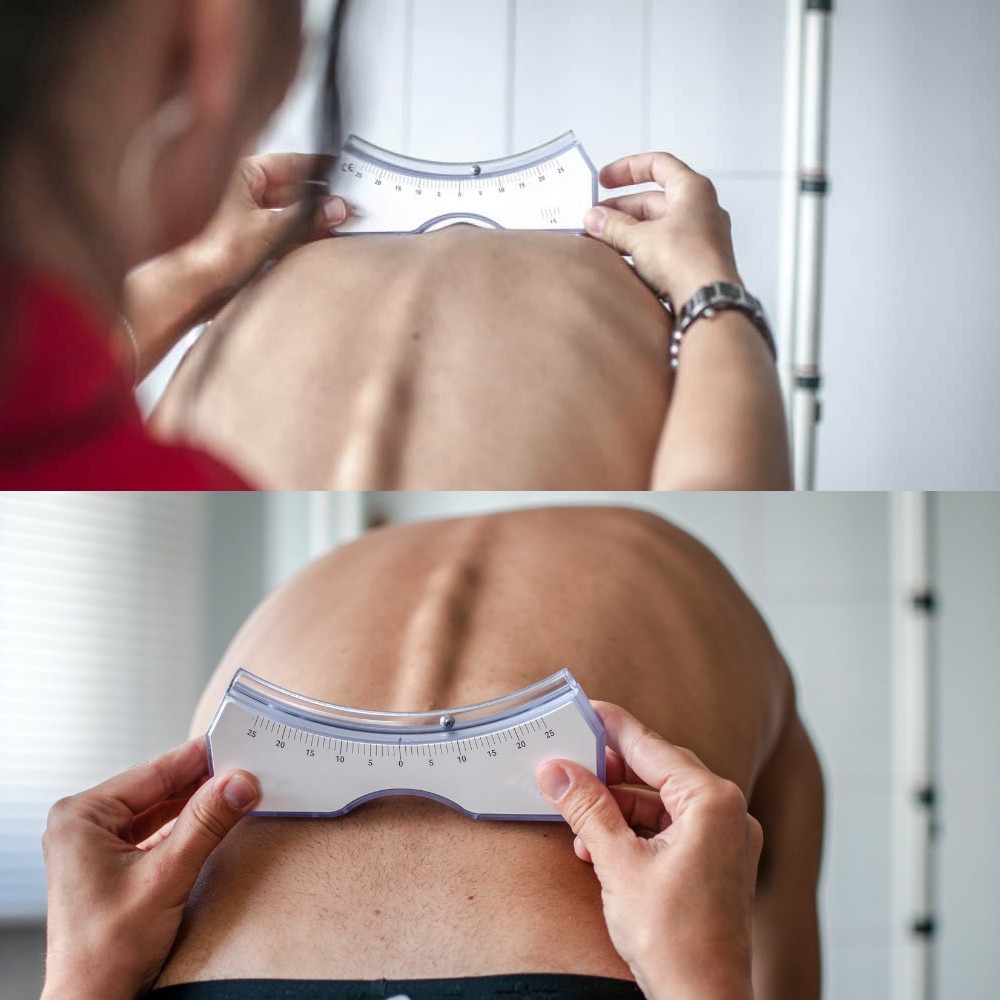
Diagnosing scoliosis usually begins with a physical examination. Healthcare providers often check for uneven shoulders, uneven hips, or other visible signs of spinal curvature.
One common screening method is the forward bend test. During this test, the patient bends forward at the waist while the provider observes the spine for signs of asymmetry or rib prominence.
If scoliosis is suspected, imaging tests such as X-rays are typically used to measure the degree of spinal curvature. In some cases, additional imaging like MRI or CT scans may be recommended to identify underlying causes or structural abnormalities.
The severity of scoliosis is often classified based on the angle of the spinal curve, known as the Cobb angle. This measurement helps determine the most appropriate treatment plan.
Treatment Options for Scoliosis
Scoliosis treatment focuses on managing the spinal curve, preventing it from worsening, and improving overall quality of life. The best treatment approach depends on several factors, including the severity of the curve, the patient’s age, the type of scoliosis, and whether the spine is still growing.
Some individuals with scoliosis require only regular monitoring, while others may need bracing, therapy, or surgical intervention. Early diagnosis plays an important role in determining which treatment option will be most effective.
Below are the most common treatment options used to manage scoliosis.
Observation and Regular Monitoring
For mild scoliosis cases, doctors often recommend observation rather than immediate treatment. This approach is typically used when the spinal curve is small—usually less than 20 degrees—and not causing noticeable symptoms.
Patients are monitored through periodic medical examinations and imaging tests such as X-rays. The goal is to track whether the curve progresses over time.
Monitoring is especially important for children and adolescents who are still growing, as spinal curves may worsen during growth spurts. If the curve begins to increase, doctors may recommend additional treatment options.
Observation may include:
- Routine physical examinations
- Periodic X-rays to measure spinal curvature
- Posture assessments
- Monitoring growth and development
Many individuals with mild scoliosis never require further treatment.
Chiropractic Care
Some individuals with scoliosis seek chiropractic care at Resilience Chiropractic as part of their treatment plan. Chiropractic adjustments focus on improving spinal mobility, reducing muscle tension, and supporting better posture.
While chiropractic treatment cannot reverse scoliosis, it may help manage symptoms such as back stiffness, muscle imbalance, and discomfort.
Chiropractors may use several techniques, including:
- Gentle spinal adjustments
- Postural correction strategies
- Soft tissue therapy
- Stretching and strengthening exercises
- Lifestyle and ergonomic recommendations
These treatments may help improve spinal function and support other scoliosis management strategies.
Bracing
Bracing is one of the most common non-surgical treatments for scoliosis, particularly for adolescents whose bones are still developing. A brace does not cure scoliosis or straighten the spine permanently, but it can help prevent the curve from worsening during growth.
Doctors typically recommend bracing when the spinal curve measures between 25 and 40 degrees and the patient is still growing.
The brace is custom-made to fit the patient’s body and is usually worn for most hours of the day, depending on the treatment plan. Some braces are worn under clothing and are designed to be as discreet and comfortable as possible.
Common types of scoliosis braces include:
- Thoracolumbosacral Orthosis (TLSO) – the most widely used brace that fits under the arms and around the rib cage, lower back, and hips
- Milwaukee Brace – a full-torso brace with a neck ring, used for curves in the upper spine
- Nighttime Braces – worn only during sleep and designed to correct spinal alignment while lying down
Consistent brace use significantly improves the chances of preventing curve progression.
Physical Therapy
Physical therapy can play an important role in strengthening the muscles that support the spine. While exercises alone usually cannot correct a structural spinal curve, they can improve posture, flexibility, and muscle balance.
Specialized scoliosis exercise programs are designed to help stabilize the spine and improve alignment.
Physical therapy may include:
- Core strengthening exercises
- Postural training
- Stretching and flexibility work
- Breathing exercises to support rib cage expansion
- Balance and stability exercises
Some programs focus specifically on scoliosis management, teaching patients how to correct their posture and strengthen spinal support muscles.
Regular physical therapy may also help reduce discomfort and improve overall mobility.
Pain Management
Pain is more common in adults with scoliosis, especially those with degenerative scoliosis. Managing pain is an important part of treatment, particularly when spinal changes affect nerves or surrounding muscles.
Pain management options may include:
- Anti-inflammatory medications
- Physical therapy exercises
- Heat or cold therapy
- Massage therapy
- Lifestyle modifications
In some cases, doctors may recommend spinal injections to reduce inflammation around irritated nerves.
Pain management treatments aim to improve comfort and maintain daily function.
Surgical Treatment
Surgery is usually considered only when scoliosis becomes severe or continues to worsen despite other treatments. Doctors typically recommend surgery when the spinal curve exceeds 40 to 50 degrees or when the condition causes significant pain or breathing problems.
The most common surgical procedure for scoliosis is spinal fusion.
During spinal fusion surgery, surgeons connect two or more vertebrae using bone grafts, metal rods, screws, or hooks. This stabilizes the spine and prevents the curve from progressing further.
Spinal fusion helps:
- Correct spinal curvature
- Stabilize the spine
- Prevent further curve progression
- Improve overall alignment
Recovery time varies depending on the individual and the extent of the surgery, but many patients return to normal activities after healing.
Living with Scoliosis
Many individuals with scoliosis lead active, healthy lives. With early diagnosis and appropriate treatment, most cases can be managed effectively.
Maintaining good posture, staying physically active, and strengthening core muscles can help support spinal health. Regular medical checkups are also important for monitoring any changes in the spinal curve.
Parents of children with scoliosis should work closely with healthcare providers to track growth and ensure the condition does not progress. Early intervention can often prevent more serious complications later in life.
Expert Scoliosis Care and Support in San Leandro
Scoliosis is a complex condition that can develop for many different reasons. From idiopathic scoliosis, which has no clear cause, to congenital, neuromuscular, and degenerative forms, each type affects the spine in unique ways.
Understanding the different types of scoliosis and their common causes can help individuals recognize symptoms early and seek appropriate care. While some cases are mild and require little intervention, others may need monitoring, bracing, physical therapy, or surgical treatment.
At Resilience Chiropractic in San Leandro, our team is committed to helping patients understand their spinal health and explore the most appropriate care options for their condition. Whether you are seeking an evaluation for early scoliosis symptoms or looking for supportive treatment to improve comfort and mobility, professional guidance can make a significant difference.
With early diagnosis and proper management, many people with scoliosis can maintain good spinal health and continue living active, fulfilling lives. Awareness and education remain essential tools in identifying the condition early and ensuring that those affected receive the support and treatment they need.If you or a loved one are experiencing symptoms of scoliosis or have concerns about spinal alignment, contact Resilience Chiropractic in San Leandro today at (510) 969-4048 to schedule a consultation and learn more about your care options. Early attention can help protect your spine and support long-term health.