
Back pain has quietly become one of the most common workplace health complaints worldwide. Whether you work in a corporate office, from home, or at a desk-based job, spending long hours sitting, typing, and staring at screens places continuous stress on your spine. Over time, poor posture, improper workstation setup, and lack of movement can lead to chronic back pain that affects productivity, comfort, and overall quality of life.
The good news is that work-related back pain is often preventable—and highly treatable. By combining proper office ergonomics with professional chiropractic care, many people can significantly reduce discomfort, restore spinal health, and prevent long-term damage.
This article explores why back pain is so common at work, how ergonomics can protect your spine, and how chiropractic treatment plays a vital role in relieving and preventing office-related back pain.
Why Back Pain Is So Common in Office Workers
The human spine is designed for movement, not prolonged sitting. Unfortunately, modern work environments demand the opposite. Many office workers spend 6 to 10 hours per day seated, often in positions that place uneven pressure on the spine.
Common contributors to office-related back pain in San Leandro include:
- Prolonged sitting without breaks
- Poor chair support
- Incorrect desk or monitor height
- Slouching or forward-head posture
- Repetitive motions (typing, mouse use)
- Lack of movement throughout the day
When the spine is under constant stress, muscles tighten to compensate, discs experience increased pressure, and nerves can become irritated. This combination often results in lower back pain, upper back stiffness, shoulder tension, and even headaches. Without intervention, these issues may worsen and develop into chronic pain conditions.
Chiropractors frequently see patients whose pain stems directly from workplace habits. The good news is that ergonomic improvements paired with chiropractic treatment can address both the cause and the symptoms of work-related back pain.
The Role of Ergonomics in Preventing Back Pain
Ergonomics focuses on designing work environments that support the body’s natural alignment and movement. Ergonomics is the science of designing your workspace to fit your body—not forcing your body to adapt to your workspace. Proper ergonomics helps:
- Maintain natural spinal curves
- Reduce muscle strain and fatigue
- Improve circulation
- Increase focus and productivity
- Lower the risk of long-term injuries
When ergonomics are ignored, the body adapts in unhealthy ways. Poor desk height, improper chair support, or incorrect screen placement can gradually pull the spine out of alignment. Over time, these small stresses accumulate and lead to significant discomfort.
Implementing ergonomic principles at work can help maintain spinal health, reduce muscle fatigue, and lower the risk of injury. However, ergonomics alone may not fully address existing spinal misalignments—this is where chiropractic care becomes essential.

Ergonomic Tips for a Pain-Free Office
Making simple ergonomic changes can dramatically reduce strain on your spine. These adjustments work best when combined with chiropractic care to address underlying spinal problems.
1. Optimize Your Chair for Spinal Support
Your office chair should support the natural curves of your spine.
Key tips:
- Sit with your feet flat on the floor
- Keep your knees at or slightly below hip level
- Use lumbar support to maintain the natural curve of your lower back
- Sit back fully in the chair rather than perching on the edge
Even with proper seating, prolonged sitting still stresses the spine. Chiropractors often recommend alternating between sitting and standing throughout the day.
2. Position Your Desk and Monitor Correctly
Your desk setup plays a crucial role in posture.
Monitor positioning:
- Top of the screen at or slightly below eye level
- About an arm’s length away from your face
- Centered directly in front of you
This setup reduces neck strain and prevents forward-head posture. Chiropractic care can help reverse the postural damage caused by years of improper monitor positioning.
3. Improve Keyboard and Mouse Placement
Reaching forward or to the side repeatedly can strain the shoulders and upper back.
Best practices:
- Keep keyboard and mouse close to your body
- Elbows bent at about 90 degrees
- Wrists in a neutral position
Poor arm positioning often leads to shoulder tension and upper spine misalignment—conditions commonly treated with chiropractic adjustments.
4. Take Frequent Movement Breaks
Even the most ergonomic setup cannot counteract hours of immobility.
Try this:
- Stand or walk for 2–5 minutes every 30–60 minutes
- Perform gentle spinal stretches at your desk
- Rotate shoulders and stretch the neck regularly
Chiropractors emphasize movement because spinal joints rely on motion for nutrition and flexibility. Regular movement helps maintain joint health and reduces stiffness.
5. Practice Desk-Friendly Stretches
Simple stretches can ease tension and support spinal health.
Helpful stretches include:
- Seated spinal twists
- Chest-opening stretches to counter slouching
- Neck side bends and rotations
- Standing back extensions
A chiropractor can recommend specific stretches based on your posture, spinal alignment, and work demands.

The Role of Chiropractic Care in Work-Related Back Pain
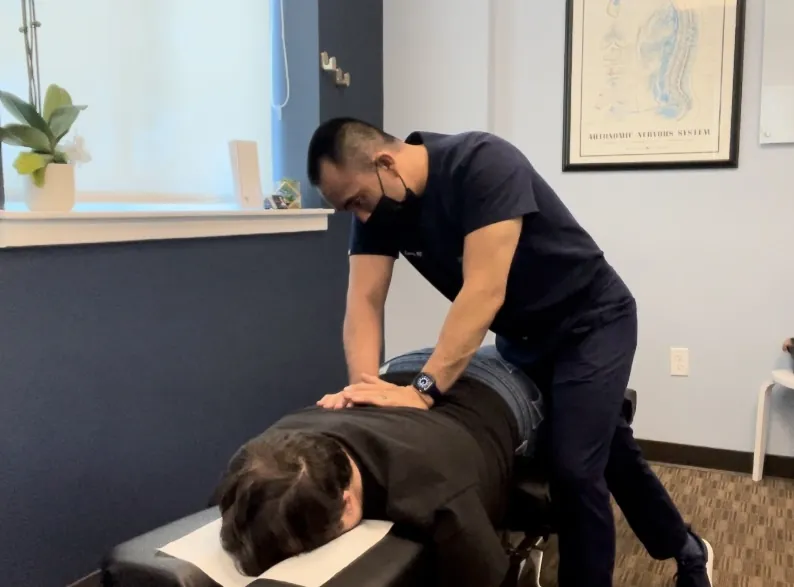
While ergonomic changes can reduce strain, they cannot correct existing spinal misalignments or joint dysfunction. Chiropractic care focuses on restoring proper spinal alignment, improving mobility, and supporting the body’s natural healing process.
How Chiropractic Treatment Helps Office Workers
Chiropractic care addresses both the symptoms and the root causes of workplace back pain.
Benefits include:
- Spinal adjustments to restore alignment
- Reduced pressure on nerves and discs
- Improved posture and spinal mechanics
- Decreased muscle tension
- Increased range of motion
- Enhanced comfort during work hours
Many patients report improved focus, energy, and productivity after chiropractic treatment because their pain no longer distracts them.
Chiropractic Adjustments and Ergonomics Work Together
Think of ergonomics as prevention and chiropractic care as correction. Ergonomic improvements reduce future stress, while chiropractic treatment corrects damage that has already occurred.
A chiropractor in San Leandro may:
- Assess your sitting and standing posture
- Identify spinal misalignments related to desk work
- Provide ergonomic advice tailored to your job
- Recommend exercises to strengthen postural muscles
- Develop a treatment plan to prevent recurrence
This personalized approach is far more effective than generic ergonomic advice alone.
Common Work-Related Conditions Chiropractors Treat
Office work can contribute to several musculoskeletal conditions that respond well to chiropractic care, including:
- Chronic lower back pain
- Neck pain and stiffness
- Upper back and shoulder tension
- Sciatica
- Disc bulges or herniations
- Repetitive strain injuries
- Tension headaches related to posture
Early chiropractic intervention can prevent these issues from becoming long-term or debilitating.
A Pain-Free Office Starts with Your Spine
Back pain at work is not inevitable. With the right ergonomic setup, healthy movement habits, and professional chiropractic care from Resilience Chiropractic, you can protect your spine and enjoy a more comfortable, productive workday in San Leandro.
Chiropractic care goes beyond temporary relief—it addresses the structural issues caused by modern work habits. By combining ergonomic awareness with chiropractic treatment at Resilience Chiropractic, office workers can break the cycle of pain, improve posture, and support long-term spinal health.
If your job is taking a toll on your back, your spine may be asking for attention. Investing in proper ergonomics and chiropractic care today can make the difference between chronic discomfort and a pain-free, energized work life. To schedule an appointment, contact Resilience Chiropractic in San Leandro at (510) 969-4048.