As a local chiropractor, I understand that many of you may be dealing with back pain caused by poor posture, and I want you to know that you are not alone. This is a common issue, but fortunately, there are natural and effective solutions that can help alleviate your discomfort. By making informed choices about your environment and incorporating simple exercises into your routine, you can significantly improve your posture and overall well-being.
Let’s delve into three of the best strategies to combat posture-related back pain. Firstly, selecting the right furniture—such as ergonomic chairs and desks—can greatly impact your posture throughout your day. Secondly, engaging in specific exercises designed to strengthen your core and back muscles will support your spine and promote better alignment. Lastly, regular chiropractic adjustments can help realign your spine and improve your posture, allowing your body to function more optimally.
By understanding how each of these strategies works in harmony to enhance your posture, you can take proactive steps towards a more comfortable and pain-free life. Together, we can explore these solutions and work towards transforming your daily comfort and health.
Incorporate Ergonomic Furniture
As a local chiropractor, I want to share some important insights on how incorporating ergonomic furniture can significantly improve your comfort and posture, especially if you spend long hours sitting at a desk.
Many people aren’t aware of how crucial proper support is for their spine, and this is where ergonomic furniture comes into play.
Ergonomic chairs are designed with your body’s natural curvature in mind. They provide essential support for your spine, which can help reduce strain on your lower back—a common issue I see in my practice.
When selecting an ergonomic chair, look for adjustable features such as seat height and lumbar support to ensure it fits your unique body shape.
Another fantastic option is a sit-stand desk. These desks allow you to alternate between sitting and standing throughout your workday, which can relieve pressure on your spine and boost circulation.
This flexibility is key to maintaining a healthier posture.
Don’t overlook the benefits of a footrest! Keeping your feet flat on the ground promotes better alignment and reduces strain on your legs and back.
Additionally, simple adjustments like using a monitor riser to position your screen at eye level can help prevent neck strain, a common complaint I encounter in my patients.
By investing in ergonomic furniture, you’re taking proactive steps to prevent posture-related back pain and improve your overall work experience.
Practice Regular Stretching and Strengthening Exercises
As your local chiropractor, I want to emphasize the importance of maintaining good posture and alleviating back pain through regular stretching and strengthening exercises. These practices are vital in enhancing your flexibility and reinforcing the muscles that support your spine.
I recommend starting with gentle stretches, such as the cat-cow or child’s pose, to help loosen tight muscles and improve your mobility. These foundational movements can make a significant difference in how your body feels and functions.
Once you feel comfortable with these stretches, it’s beneficial to incorporate strengthening exercises that focus on your core, back, and shoulders. Exercises like planks, bridges, and rows are excellent choices. By consistently engaging in these activities, you can help correct postural imbalances and provide better support for your spine.
It’s best to aim for at least 15-30 minutes of stretching and strengthening exercises a few times a week. Always listen to your body; if you experience any discomfort, consider adjusting your routine or seeking guidance from a professional.
Mindfulness and Posture Awareness Techniques
As a local chiropractor, I want to share with you how practicing mindfulness and posture awareness can significantly support your journey to alleviate back pain.
It’s essential to tune into your body and become aware of how you sit, stand, and move throughout your daily activities. I recommend taking a few moments each day to check in with your posture. Are your shoulders hunched? Is your back aligned? Recognizing these patterns is the crucial first step toward making improvements.
Incorporate mindfulness techniques such as deep breathing exercises or meditation to help you stay grounded and focused on your body’s alignment. Setting reminders on your phone can be a helpful way to pause and assess your posture regularly.
Additionally, engaging in activities like yoga can enhance your awareness of your body while promoting relaxation and flexibility. By combining mindfulness practices with the physical adjustments we discuss in our chiropractic sessions, you can build a solid foundation for long-lasting relief from posture-related back pain.
Together, we can work towards a healthier, pain-free lifestyle.
Conclusion
As a local chiropractor, I want to share some valuable strategies that can significantly alleviate posture-related back pain. One of the most effective steps you can take is to incorporate ergonomic furniture into your workspace. By selecting the right chair and desk setup, you can provide the necessary support for your spine while you work, which is crucial for maintaining proper alignment and reducing strain.
In addition to ergonomic adjustments, I encourage you to practice regular stretching and strengthening exercises. These activities help keep your muscles flexible and balanced, minimizing the risk of discomfort. Simple stretches can be easily integrated into your daily routine, and they play a vital role in enhancing your overall mobility.
Also, it’s important to stay mindful of your posture throughout the day. Developing an awareness of how you position your body can reinforce good habits, making a significant difference in your spinal health. By embracing these practices, not only will you ease discomfort, but you’ll also promote your overall well-being. Remember, chiropractic care can further support these efforts by addressing any underlying issues and guiding you on your journey to a healthier back.
Ernest Luong
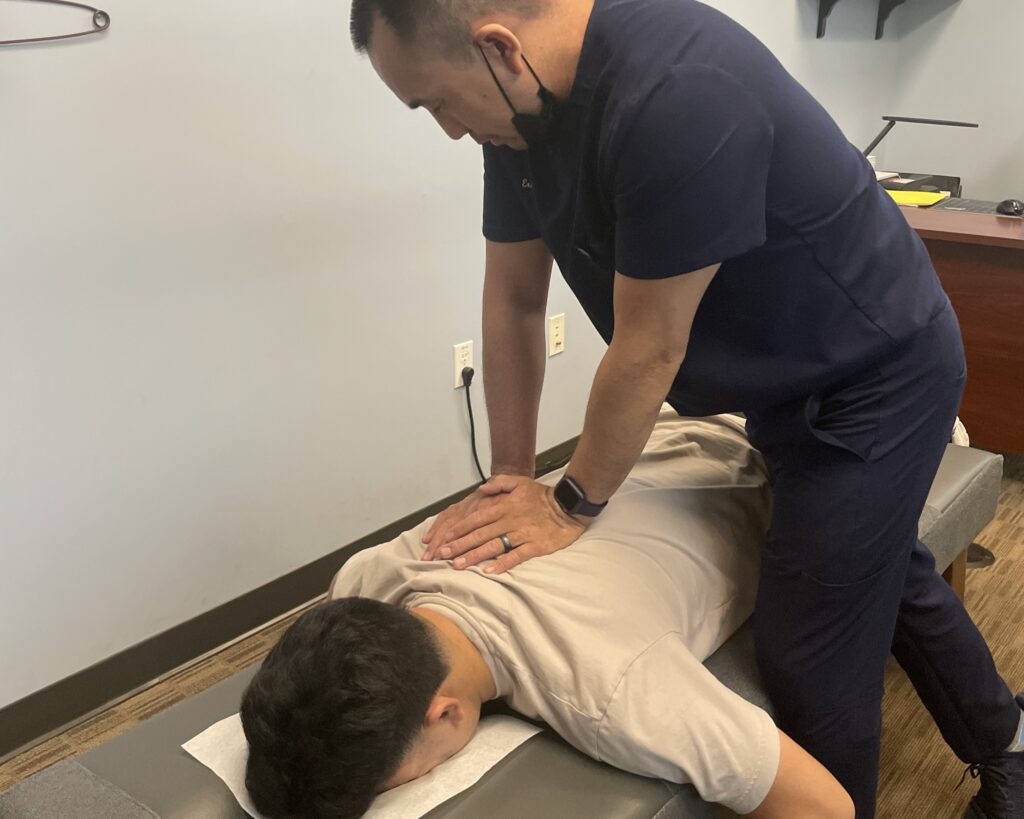
Dr. Ernest Luong is a Bay Area native and was raised in the city of Fremont, California. He graduated with honors from Life Chiropractic College West and is a board certified Doctor of Chiropractic. Having received extensive advanced clinical training, he is well adept to provide you and your family with the natural health care you deserve. Before opening his own clinic, he was already successfully treating many patients with headaches, neck pain, lower back pain, sciatica, and many more issues at several other established chiropractic clinics in the area.
Discover what causes vertigo and how chiropractic care can help restore your balance. Learn how targeted adjustments may reduce dizziness and improve quality of life.
I’ve been seeing Dr Luong for over 15 years.
The front desk staff are fantastic and helpful.
They accept many insurances.
Dr Luong has been helping me after all these years. Everyone and anyone who needs help with their back, or get adjustments, pinch nerves. You should go see him.
Dr Luong is there too help's you!
I can actually walk again! “No kidding” There are many time before, I was unable to get up or go upstairs, but when’s I see Dr Luong for my visits, it amazing feeling!
Trust me his really great chiropractor!
Thank You, So Much Dr. Luong!
Your Patient, Veronica
Dr. Earnest and his staff provide excellent care. I'm a long-standing consumer of chiropractic treatment and greatly appreciate Dr. Earnest's skills -- both chiropractic and listening. My pain levels are down substantially, and my functionality is way up. I particularly appreciate that Dr. Earnest does not push pre-payment plans.
8/14/26 Update. I've been seeing Dr. Earnest for several months now. He remains a valuable member of my vare team. He's a great partner on my project to get my head screwed on straight.
Great experience at Resilience Chiropractic! The doctor was knowledgeable, attentive, and took the time to explain everything clearly. The office is clean, modern, and has a very comfortable atmosphere. Highly recommend! ⭐⭐⭐⭐⭐
Dr Ernest and staff are always so kind, they greet you very warmly when you first walk in and when you leave too. Dr Ernest listens to your pain and works with you to help you get better. After an adjustment I always feel a lot better than I walked in and am ready for work, being a dad, and life.
Was nervous to start going to a chiropractor and spent a lot of time researching educated doctors- so happy I found Resilience Chiro! Been coming here for about a year and Dr Luong is the best. I always feel better after my adjustments. The staff is friendly and always kind!
First time attending chiropractor and don’t know what to expect. So far my first appointment my consultation with Dr. Ernest went well, he listen and he had given me information. Right now just looking for alternative solution and have some kind of relief to my pain. I’m looking forward to my next appointment and hoping this will aid in my future wellness.
Super professional facility! They always have a warm greeting. I’ve been coming here for over 2 years on and off whenever I feel I need an adjustment. I’ve also brought my pregnant wife and my son for adjustments. I’ve recommended a lot of family and friends here. They all have great outcomes!
Dr. Ernest is amazing, and I highly recommend him! He's been a tremendous help whenever I've needed treatment and is just as great for keeping your body feeling its best with regular maintenance. This is your sign to book an appointment!
Went to the office for the first time to make an appointment and Dr. Luong made time for me that day. Friendly, relaxed environment. Clean and efficient operation. Walked out feeling younger. Will visit regularly going forward.
I been going to Resilience Chiropractic good amount of years now. It's great Chiropractor. Try it and give sometimes to see the results. You're body will be appreciate it.
I’ve been seeing Dr Luong for over 15 years.<br>The front desk staff are fantastic and helpful.<br>They accept many insurances.<br>Dr Luong has been helping me after all these years. Everyone and anyone who needs help with their back, or get adjustments, pinch nerves. You should go see him.<br>Dr Luong is there too help's you!<br>I can actually walk again! “No kidding” There are many time before, I was unable to get up or go upstairs, but when’s I see Dr Luong for my visits, it amazing feeling!<br>Trust me his really great chiropractor!<br>Thank You, So Much Dr. Luong!<br>Your Patient, Veronica
Yesterday, my son and I had a great first visit to Resilience Chiropractic. The office was welcoming and professional, and Dr. Ernest was especially thoughtful and attentive. He took the time to explain everything clearly and made us feel comfortable throughout. We’re looking forward to coming back!
Visit was quick and thorough! Extremely efficient and effective! Ernest was able to identify the issue and fix my complications! Will see Dr Luong again!
Dr Ernest Luong is an exceptional chiropractor and individual. He cares for your needs, is extremely understanding and patient, and wants to help you get back to where you were before and even more. 6 Stars if possible
Dr. Luong is a miracle worker!<br>I don’t know exact how he does it, but I know that he makes the pain go away. I’ve always been very leery about Chiropractic procedures, especially neck, cracking, but Dr. Luong does it in such a gentle and confident way, that I feel at ease and relaxed,, and the bottom line is when I walk out of his office I always feel better. His office is clean and comfortable, and his prices are quite reasonable.I have recommended him to several of my friends and family, and will continue to do so.
Such a knowledgeable, efficient and attentive chiropractor and staff. I’ve been treated with kindness and respect every time I’ve visited over the past several years, and left with feeling much better. 10/10 would recommend
I went to bed last night feeling better. My back pain had eased. I love the massage table and the decompression tables. I will be back next week for decompression.
Français venu pour travailler et pas de chance, je me fais mal au dos. Perdu, je prend rendez-vous le matin pour l'après-midi, incroyable. L'accueil est super et le médecin est d'un professionnalisme a tout épreuve, il m'a sauvé 😅. Merci beaucoup.
This is my first Chiropractor spot. I been going there since it first open. It help my body through alot pain. The work I do, it came with alot pain. Resilience Chiropractor is the place to recovery and tune up🙌.
I was in a car accident and have never been to a chiropractor. I realized I needed it bad. Saying I was terrified is an understatement. The staff and Chiropractor were amazing. Made me feel comfortable and eased my anxiety. Another chiropractor i spoke to on the phone creeped me out. 10/10 definitely recommend!!!!
Dr. Earnest and his staff provide excellent care. I'm a long-standing consumer of chiropractic treatment and greatly appreciate Dr. Earnest's skills -- both chiropractic and listening. My pain levels are down substantially, and my functionality is way up. I particularly appreciate that Dr. Earnest does not push pre-payment plans.
Dr. Ernest is an excellent chiropractor—professional caring, and very effective. I felt real relief after just a few visits. I always recommend him to my friends and families.
It was very professional and exactly what I needed. I haven’t been to a chiropractor in a while and i was very impressed with how cheerful the staff was and how attentive the Dr. was before, during and after the session. My wife was the one who went here first and I followed her lead after a few weeks. I’m glad I did. I will recommend this establishment to anyone in need of this service.
I've been dealing with a lower back pain for years, and it's been a constant struggle with certain movements. After a few visits here, I can already feel a noticeable difference. Movements that used to be painful are a more manageable, which has been a huge relief.<br>The staff at the office are very friendly and welcoming, which makes each visit a positive experience. The doctor is knowledgeable and takes time to understand what's going on and explain the treatment approach clearly.<br>Overall, I'm really encouraged by the progress of getting a chiropractic adjustment and would definitely recommend this place to anyone dealing with ongoing back pain.
Ernest is an absolute gem. He's kind, attentive, and careful, and I don't trust anyone else with my spine. I needed a good chiropractor after several injuries and after being harmed by other chiropractors. Ernest is great because he listens, will respect your wishes, and adjusts in a manner that is easy on the body. I have seen him regularly for 2 years at least. He also has great suggestions on muscle balancing that you can use in your exercise program. He's been an immense help to me in my recovery.
THE CHIROPRACTOR ABD HIS ASSISTANT ARE VERY NICE AND MAKE YOU FEEL COMFORTABLE.I WAS IN SO MUCH PAIN FOR MONTHS DUE TO A CAR ACCIDENT.WHEN I LEFT THERE I FELT SO RELIEVED FROM JUST ONE SESSION.EXCELLENT CHIROPRACTER
Everyone in the office are very pleasant and professional. I like the experience that I have received. They are always ready and on time for you. Very nice people...
We had such a wonderful experience at Resilience Chiropractic with Dr. Luong. I honestly can’t say enough good things about him and his team.<br><br>We brought our 17-month-old daughter in because she had a very sore arm and we were worried it might be broken. We are visiting from another country and don’t have insurance here, so we were quite anxious about what to do. The reception staff were unbelievably kind and helpful and managed to squeeze us in the same day, which meant so much to us.<br><br>Dr. Luong was incredibly patient and thorough with our daughter. He took the time to really figure out what was going on with her arm and even did an X-ray to rule out fractures and breaks and to make sure everything was okay. He was so gentle, calm, and kind with her, which immediately put us at ease as parents.<br><br>I also ended up getting an adjustment myself, and I felt immediate relief in my hips and back afterwards. It’s clear that Dr. Luong genuinely cares about his patients and the quality of care he provides.<br><br>This is easily one of the best chiropractic experiences I’ve had in a long time. If you’re looking for a chiropractor in the San Leandro area (or in The Bay Area in general) who is knowledgeable, compassionate, and truly dedicated to his patients, I highly recommend Dr. Luong and Resilience Chiropractic.
Loved going to Resilience Chiro, Doc always takes good care of his patients. Always a friendliest smile every time we come into their office. Staff is always excellent and the healing is real. Always love coming in for adjustments.
I found Dr. Ernest through a referral from another chiropractor and he has helped me tremendously with my shoulder and lower back issues! From the moment I walk through the door I feel welcomed, cared for and treated well. I highly recommend Dr. Ernest.
Always great 👍 and feel much better. When I go to Resilience Chiropractor, his the best Chiropractor. Go check him out u will feel much better if u have a back pain,shoulder,lower. Highly recommended 👌 👍 👏
Dr. Ernest Luong has been very patient and thorough with his explanations! Everyone and the entire staff was very welcoming and friendly! This is the chiropractic center that I would highly recommend! I already even started talking about my experience with my friends and family after!
Resilience chiropractor it’s a great chiropractic center, great customer service from Moesha in the front desk, she is always smiling and make people feel welcome, the chiropractor Dr. Ernest Loung is a great doctor, he has help me to improved my quality of life, thanks to his care, my stiffness and numbness had improved in a 90 %, the pain in my legs and my back had almost completely disappeared, I’ll recommend this business to my family and friends, because they have very good equipment like the decompression machine that helps to gently stretch the spine creating negative pressure<br>That retracts bulging/ herniated discs and reduce nerve pressure. Overall this place it’s a hidden gem in San Leandro CA.
Went to the office for the first time to make an appointment and Dr. Luong made time for me that day. Friendly, relaxed environment. Clean and efficient operation. Walked out feeling younger. Will visit regularly going forward.
I usually go in for chiropractic care once or twice a year as a form of maintenance, and Resilience Chiropractic has consistently been a great experience. The environment is calm and professional, and the team takes the time to understand how your body is moving and functioning rather than rushing you through an appointment.<br><br>Each visit feels intentional and focused on helping me feel more aligned and mobile afterward. I appreciate that the approach is centered on long-term wellness and functionality, not just quick fixes. It’s the kind of place I trust when my body needs a reset and some thoughtful care.<br><br>Would definitely recommend to anyone looking for supportive, well-rounded chiropractic care in a comfortable setting.
I want to state that the office is very clean & the front desk MA is very respectful and sweet . The doctor is the best . I pulled muscle he made sure he explain my treatment and steps on how heal while coming to treatments and adjust me now I can walk without limping .
I have been a patient of Dr. Earnest since before he created Resilience Chiropractic.<br>I have been going to chiropractors since the late 1990's and he is the best!<br>He is knowledgeable and has the skills to help you.<br>Trust me, I am a big guy with multiple issues and he keeps me pain free and flexible.<br>I cannot recommend him enough.<br>He is by far the best.<br>Give him a try. You will be impressed!
Awesome first visit … welcoming / friendly and competent Staff<br>Dr. Luong heard me ,felt me and treated me in our first meeting and I had super positive results .. when I needed it the most . He has become my Chiropractor going forward!
Resilience Chiropractic has amazing service, the clerks are extremely friendly and helpful. Dr. Ernest is AMAZING, very attentive to problem areas. Makes you very comfortable during every appointment. The office is very accommodating to customers needs and availability. Overall I recommend Resilience Chiropractic to anyone looking for an amazing doctor and great customer service.