If you’ve been dealing with hip or lower back discomfort, you’ve probably been told to stretch your hip flexors. It’s one of the most common pieces of advice found in fitness articles, YouTube videos, and even from well-meaning friends at the gym. But what if that daily stretching routine is actually contributing to your pain rather than relieving it? Here in San Leandro, many patients walk into Resilience Chiropractic surprised to learn that their diligent stretching habits might be working against them. In this article, we’ll explore why stretching your hip flexors might be making your pain worse, what’s really happening in your body, and how to address the root cause of your discomfort in a more effective way.
Why might stretching hip flexors worsen pain? Repeatedly stretching already lengthened or weak hip flexors can increase instability, alter pelvic positioning, and mask underlying movement dysfunction. When hip flexors are chronically overstretched due to poor posture or compensatory patterns, additional stretching may exacerbate imbalances rather than correct them.
Table of Contents
- Understanding Your Hip Flexors and What They Actually Do
- The Common Misconception About Tight Hip Flexors
- When Stretching Backfires: The Real Problem
- How Modern Postural Patterns Create Confusion
- How Chiropractic Care Addresses Hip Flexor Dysfunction
- What to Do Instead of Stretching
- When to See a Chiropractor About Hip or Lower Back Pain
- Stretching vs. Strengthening Approaches
- Myths vs. Facts About Hip Flexor Pain
- Final Thoughts
Understanding Your Hip Flexors and What They Actually Do
Your hip flexors are a group of muscles located at the front of your hip that help you lift your knee toward your chest, bend at the waist, and stabilize your pelvis during movement. The primary hip flexor is the iliopsoas, which is actually two muscles working together: the psoas major and the iliacus. Other muscles that contribute to hip flexion include the rectus femoris (part of your quadriceps), the sartorius, and the tensor fasciae latae.
These muscles play a crucial role in nearly every movement you make throughout the day. Walking, running, climbing stairs, getting out of a chair, and even maintaining your balance all require properly functioning hip flexors. They connect your spine, pelvis, and legs, making them essential for both mobility and stability.
When these muscles are working correctly, they help maintain proper pelvic alignment and support your lower back. They work in coordination with your glutes, hamstrings, and core muscles to create balanced, efficient movement patterns. However, modern lifestyle habits have significantly changed how these muscles function.
The Common Misconception About Tight Hip Flexors
The fitness and wellness industry has popularized the idea that hip flexors become “tight” from sitting too much, and that stretching is the solution. While there’s some truth to the sitting part, the conclusion about stretching is often misguided. Here’s why this oversimplification can lead you down the wrong path.
When you sit for extended periods, your hip flexors are held in a shortened position. Over time, this can create what feels like tightness when you stand up or try to extend your hip. However, what most people experience isn’t true muscle shortening or tightness in the traditional sense. Instead, it’s often a combination of weakness, neurological tension, and compensatory positioning.
The sensation of tightness doesn’t always mean a muscle is actually short or needs to be lengthened. In many cases, muscles feel tight because they’re overworked, constantly engaged to compensate for other weaknesses in your movement system. At Resilience Chiropractic, we see this pattern regularly in our San Leandro patients who work desk jobs or spend significant time driving.
Additionally, the nervous system can create protective tension in muscles that it perceives as vulnerable or unstable. Your body is remarkably intelligent, and if it senses that a joint lacks proper support or control, it will tighten surrounding muscles as a protective mechanism. Stretching these muscles without addressing the underlying instability can actually send the wrong signal to your nervous system.
When Stretching Backfires: The Real Problem
So when does stretching your hip flexors make things worse? There are several scenarios where aggressive or inappropriate stretching can exacerbate your pain and dysfunction rather than relieve it.
Anterior Pelvic Tilt and Positional Lengthening
Many people who think they have tight hip flexors actually have an anterior pelvic tilt, where the pelvis rotates forward and the lower back arches excessively. In this position, the hip flexors are already in a lengthened, stretched position relative to the pelvis. They may feel tight because they’re constantly working to stabilize an unstable pelvis, but they’re not actually short.
When you add more stretching to already lengthened hip flexors, you increase the instability. This can worsen the anterior tilt, increase lower back strain, and create a cycle of compensation that spreads to other areas of your body. Your glutes and core become even less engaged, forcing your hip flexors to work harder, which perpetuates the sensation of tightness.
Weakness Masquerading as Tightness
Another common scenario is hip flexor weakness that feels like tightness. When muscles are weak and lack endurance, they fatigue quickly and develop tension as a protective response. The solution isn’t to stretch them further but to gradually strengthen and recondition them through appropriate exercise and movement patterns.
Research published in the Journal of Orthopaedic & Sports Physical Therapy has shown that weakness in the hip flexors and surrounding stabilizing muscles can contribute to altered movement patterns and pain. Stretching weak muscles can reduce their ability to generate force and provide stability, making the underlying problem worse.
Nerve Tension and Referral Patterns
Sometimes what feels like hip flexor tightness is actually nerve tension, particularly involving the femoral nerve or the upper lumbar nerve roots. These nerves pass through or near the hip flexor region, and dysfunction in the lower back or pelvis can create tension along the nerve pathway. Aggressive stretching can irritate these neural structures and increase symptoms.
Chiropractors are trained to identify when symptoms originate from nerve involvement versus true muscle dysfunction. At Resilience Chiropractic in San Leandro, we use specific orthopedic and neurological tests to determine the true source of your discomfort before recommending any intervention.
How Modern Postural Patterns Create Confusion
Understanding how your daily habits influence your hip flexor function is essential to addressing the root cause of your pain. The modern lifestyle creates specific postural adaptations that directly impact how your hip flexors behave.
Prolonged sitting doesn’t just shorten your hip flexors temporarily. It also teaches your nervous system to prefer certain movement patterns and muscle recruitment strategies. When you sit for hours, your glutes essentially “turn off” because they’re not being used. Your hip flexors, meanwhile, remain in a shortened position but often have to work harder to help you stand up and move because your glutes aren’t doing their job.
When you finally do stand up and move, your body has forgotten how to properly coordinate hip extension. Instead of engaging your glutes and hamstrings, you might hyperextend your lower back and rely on passive structures like ligaments. This creates a sensation of tightness in the front of your hip, but the real problem is weakness and poor coordination in the back of your hip.
Many residents here in San Leandro work in tech, healthcare, or service industries that involve either prolonged sitting or repetitive movement patterns. These occupational demands create predictable patterns of dysfunction that require a more nuanced approach than simple stretching.
How Chiropractic Care Addresses Hip Flexor Dysfunction
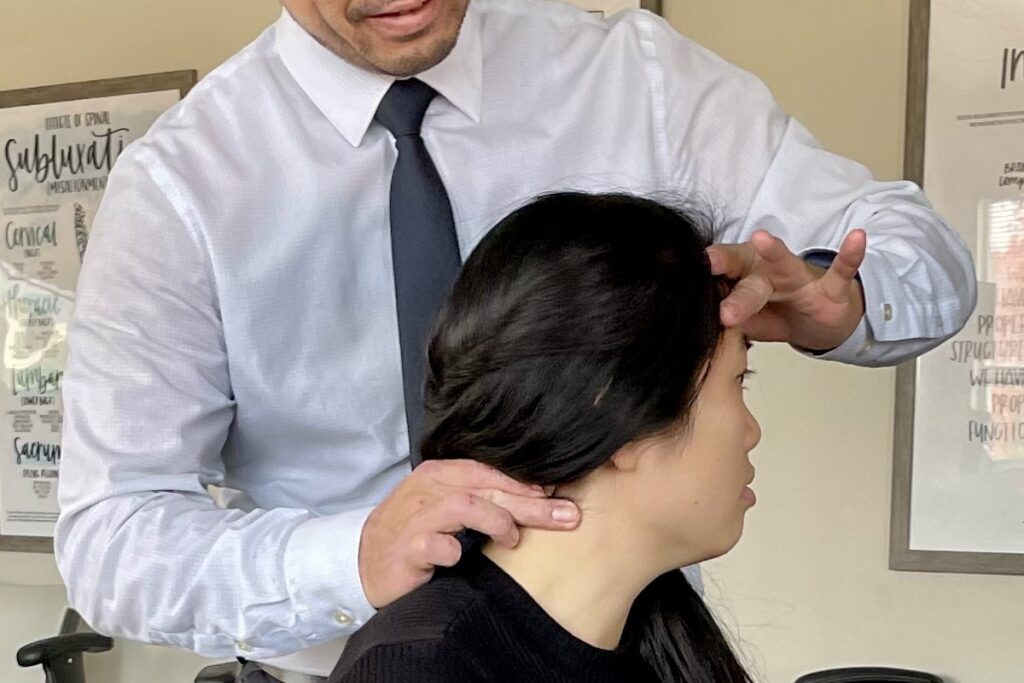
Chiropractic care offers a comprehensive, individualized approach to hip flexor and lower back issues that goes beyond generic stretching advice. At Resilience Chiropractic, we start with a thorough evaluation to understand your unique movement patterns, postural habits, and pain triggers.
The chiropractic examination includes assessment of your spine, pelvis, and hip joint alignment. Restrictions or misalignments in these areas can directly influence how your hip flexors function. If your pelvis is rotated or your lumbar spine lacks proper mobility, your hip flexors will compensate, creating the sensation of tightness and discomfort.
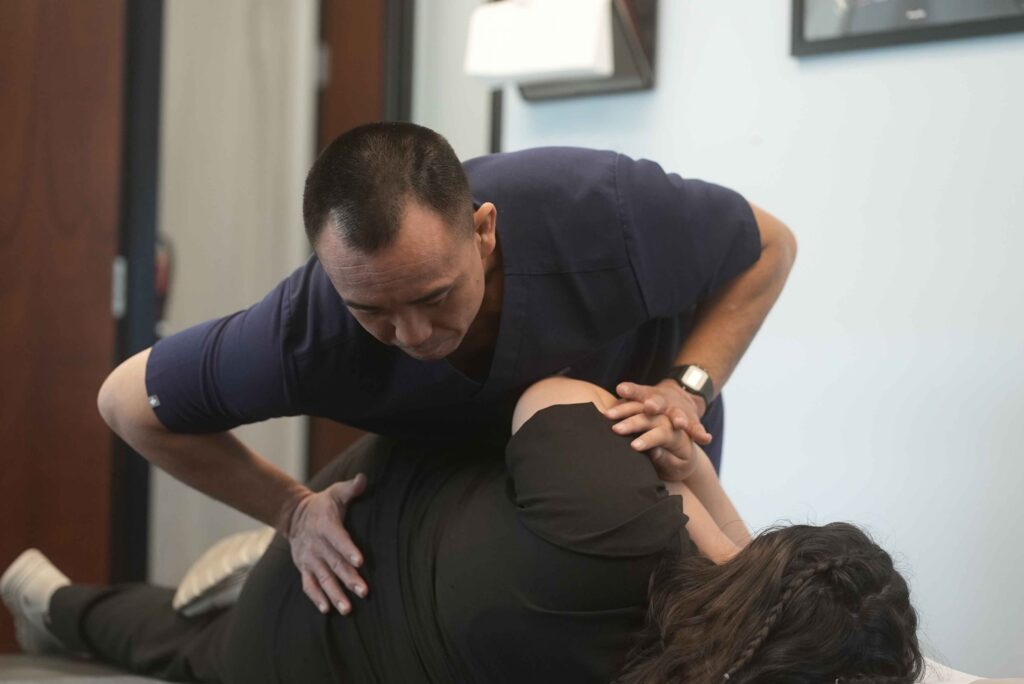
Chiropractic adjustments help restore proper joint motion and alignment, which can immediately reduce the compensatory tension in surrounding muscles. When your pelvis and spine are moving correctly, your hip flexors don’t have to work as hard to stabilize your body during everyday activities. This often provides rapid relief from that persistent tight feeling.
Beyond adjustments, chiropractors provide specific corrective exercises designed to restore balanced muscle function. Rather than generic stretching, these exercises focus on activating underactive muscles like your glutes and core while teaching your nervous system proper movement coordination. This approach addresses the root cause rather than just treating symptoms.
Soft tissue techniques such as myofascial release, trigger point therapy, and instrument-assisted soft tissue mobilization can also help address areas of excessive tension or adhesion. These techniques are applied strategically based on your individual presentation, not as a one-size-fits-all solution.
What to Do Instead of Stretching
If stretching isn’t the answer, what should you do about hip flexor discomfort and related lower back pain? Here are evidence-based strategies that address the underlying causes rather than just temporarily relieving symptoms.
Focus on Glute Activation and Strengthening
Your glutes are the natural antagonist to your hip flexors. When your glutes are strong and properly activated, they take pressure off your hip flexors and help maintain balanced pelvic positioning. Exercises like bridges, clamshells, and hip thrusts can help wake up these important muscles. The key is performing them with proper form and feeling the glutes actually working, not just going through the motions.
Improve Core Stability
A stable core provides a solid foundation for your pelvis and reduces compensatory tension in your hip flexors. Focus on exercises that challenge your ability to maintain a neutral spine position while moving your limbs, such as dead bugs, bird dogs, and planks with proper form. Quality matters more than quantity with these movements.
Address Your Sitting Posture and Habits
While you may not be able to avoid sitting entirely, you can improve how you sit and how often you break up prolonged sitting. Set a timer to stand and move every 30-45 minutes. When sitting, keep your hips and knees at roughly 90 degrees, avoid slouching, and consider using a lumbar support. Small adjustments in your workstation setup can make a significant difference over time.
Practice Proper Hip Hinge Patterns
Learning to hinge at your hips rather than excessively flexing your spine is crucial for reducing hip flexor strain. This movement pattern is used when bending down, picking things up, and in many exercise movements. When you hinge correctly using your glutes and hamstrings, your hip flexors don’t have to work as hard to control your movement.
Consider Dynamic Movement Instead of Static Stretching
If you feel the need to address hip mobility, dynamic movements that take your hip through a full range of motion with control are generally more beneficial than static stretching. Leg swings, controlled lunges with rotation, and hip circles can improve mobility without creating the instability that static stretching can cause. These movements also train coordination and strength simultaneously.
Work on Breathing Mechanics
This might seem unrelated, but your breathing patterns directly influence your core stability and pelvic positioning. The diaphragm works together with your pelvic floor and deep core muscles to create stability. Poor breathing patterns can contribute to anterior pelvic tilt and hip flexor dysfunction. Learning proper diaphragmatic breathing can be a game-changer for many people.
When to See a Chiropractor About Hip or Lower Back Pain
While some hip flexor discomfort may resolve with improved movement habits and exercise, certain signs indicate you should seek professional evaluation and care.
If your hip or lower back pain persists for more than two weeks despite rest and activity modification, it’s time to get evaluated. Chronic pain indicates an underlying dysfunction that won’t resolve on its own and may worsen over time if not properly addressed.
Pain that significantly limits your daily activities, such as difficulty walking, standing from a seated position, or climbing stairs, warrants professional attention. These functional limitations suggest more than just temporary muscle soreness and require comprehensive assessment.
If you experience pain that radiates down your leg, numbness, tingling, or weakness in your leg or foot, these symptoms may indicate nerve involvement that requires prompt evaluation. While many nerve-related issues respond well to conservative chiropractic care, it’s important to rule out serious conditions and receive appropriate treatment.
Pain that worsens with specific movements or positions, particularly if it’s becoming more frequent or intense, should be evaluated. This pattern suggests mechanical dysfunction that can be addressed with targeted chiropractic care and corrective exercise.
Here in San Leandro, many patients at Resilience Chiropractic wish they had come in sooner rather than trying to self-manage their symptoms for months. Early intervention typically leads to faster recovery and prevents the development of compensatory patterns that complicate treatment.
You should also seek care if you’ve been told to stretch your hip flexors and it consistently makes your pain worse or provides only very temporary relief. This is a clear sign that stretching isn’t addressing the root cause, and a more thorough evaluation is needed.
Stretching vs. Strengthening Approaches
| Aspect | Traditional Stretching Approach | Strengthening & Stability Approach |
|---|---|---|
| Primary Focus | Lengthening hip flexor muscles | Activating glutes, core, and stabilizers |
| Underlying Assumption | Hip flexors are short and tight | Hip flexors are weak or compensating for other dysfunction |
| Time to Relief | Temporary relief lasting minutes to hours | Progressive improvement over weeks with lasting results |
| Effect on Pelvic Position | May worsen anterior pelvic tilt | Helps restore neutral pelvic alignment |
| Addresses Root Cause | No, treats symptoms | Yes, corrects movement dysfunction |
| Risk of Worsening Pain | Higher in cases of positional lengthening or instability | Lower when properly progressed |
| Best For | Acute muscle cramping or very specific true shortening | Chronic hip/back pain, postural dysfunction, weakness patterns |
Myths vs. Facts About Hip Flexor Pain
Myth: Tight Hip Flexors Are Always Caused by Too Much Sitting
Fact: While prolonged sitting affects hip flexor function, what feels like tightness is often weakness, instability, or nerve tension rather than true muscle shortening. The sensation of tightness is your body’s way of protecting an unstable or poorly coordinated area, not necessarily an indication that the muscle fibers themselves are short.
Myth: Stretching Your Hip Flexors Every Day Will Eventually Fix Your Lower Back Pain
Fact: If daily stretching hasn’t resolved your pain after several weeks, it’s likely not the right solution for your particular problem. Lower back pain connected to hip flexor dysfunction usually requires addressing pelvic alignment, glute activation, and core stability rather than more flexibility. Continuing an ineffective intervention can actually delay proper recovery.
Myth: The More Flexible You Are, the Healthier Your Hips Will Be
Fact: Flexibility without stability and strength creates vulnerability to injury and dysfunction. Excessive flexibility, particularly in the hip flexors, can contribute to pelvic instability and increased lower back stress. The goal should be appropriate mobility combined with strength and control throughout your available range of motion, not maximum flexibility.
Myth: If Your Hip Flexors Feel Tight, They Must Be Short
Fact: The sensation of tightness and actual muscle shortness are two different things. Muscles can feel tight because they’re weak, overworked, neurologically tense, or compensating for dysfunction elsewhere. A thorough evaluation can determine the true cause of your symptoms and guide appropriate treatment.
Myth: Chiropractic Care Only Addresses the Spine, Not Hip Problems
Fact: Chiropractors are trained in the biomechanics of the entire musculoskeletal system, including the hips, pelvis, and their relationship to the spine. Hip flexor dysfunction is often related to pelvic and spinal alignment issues that chiropractors are specifically equipped to address. Treatment includes not just adjustments but also soft tissue work, corrective exercise, and movement coaching.
Final Thoughts
Understanding that stretching isn’t always the solution to hip flexor discomfort is an important step toward finding lasting relief. Your body is a complex, interconnected system where pain in one area often reflects dysfunction somewhere else. What feels like tight hip flexors may actually be your body’s response to weak glutes, poor pelvic alignment, core instability, or nerve tension.
Here in San Leandro, the team at Resilience Chiropractic is committed to helping you understand the true cause of your hip and lower back pain. We take the time to thoroughly evaluate your movement patterns, postural habits, and individual circumstances to create a personalized care plan that addresses your specific needs. Rather than offering generic advice, we provide evidence-based solutions that restore function and help you move better for the long term.
If you’ve been stretching your hip flexors religiously without lasting results, or if your pain keeps returning despite your best efforts, it may be time for a different approach. Chiropractic care combined with proper corrective exercise and lifestyle modifications can help you break the cycle of pain and compensation. Your body has an remarkable ability to heal and adapt when given the right support and guidance.
Remember, the goal isn’t just to feel better temporarily but to address the underlying dysfunction so you can return to the activities you love without constant discomfort. Whether you’re an active individual trying to get back to running and hiking in the beautiful Bay Area, or someone who simply wants to sit at work and play with your kids without pain, there’s a path forward that doesn’t involve endless stretching.
Frequently Asked Questions
How long should I try strengthening exercises before expecting results for hip flexor pain?
Most people begin noticing improvements in movement quality and pain reduction within two to three weeks of consistent strengthening and corrective exercise. However, more significant changes in strength and lasting symptom relief typically develop over six to eight weeks. Consistency is key, and working with a chiropractor can help ensure you’re performing exercises correctly and progressing appropriately.
Can hip flexor problems cause pain in other areas of my body?
Absolutely. Hip flexor dysfunction commonly contributes to lower back pain, knee pain, and even issues further up the chain like shoulder and neck tension. When your hips and pelvis aren’t functioning optimally, your body compensates with altered movement patterns that create stress in other areas. Addressing hip and pelvic dysfunction often provides relief in seemingly unrelated areas.
Is it ever appropriate to stretch my hip flexors?
Yes, in specific situations. If you’ve truly verified through proper evaluation that you have actual hip flexor shortness without instability, gentle stretching may be appropriate. Additionally, dynamic stretching as part of a warm-up routine can be beneficial. The key is knowing when stretching is appropriate for your individual situation rather than assuming it’s always the right solution.
How can I tell if my glutes are actually activating during exercises?
You should feel your glute muscles working and potentially even fatiguing during glute-focused exercises. If you feel the exercise primarily in your lower back, hamstrings, or hip flexors, your glutes probably aren’t activating properly. A chiropractor or qualified movement professional can assess your movement patterns and teach you how to properly engage these muscles.
Will chiropractic adjustments immediately fix my hip flexor pain?
While many patients experience significant relief after their first few adjustments, lasting resolution typically requires a combination of adjustments, corrective exercise, and activity modification over several weeks. Chiropractic care addresses the structural and neurological components of your dysfunction, but retraining movement patterns and building strength takes time. The good news is that you should notice progressive improvement with consistent care.
What’s the difference between hip flexor pain and a hip flexor strain?
A hip flexor strain is an acute injury involving actual damage to muscle fibers, usually from a sudden forceful movement or overstretching. It causes immediate sharp pain, possible bruising, and significant functional limitation. Most chronic hip flexor discomfort that people experience is not a true strain but rather dysfunction, weakness, or compensatory tension that develops gradually over time from poor movement patterns and postural habits.
TL;DR – Key Takeaways
- Stretching hip flexors can worsen pain when the real problem is weakness, instability, or compensatory tension rather than true muscle shortness
- Many people with anterior pelvic tilt have hip flexors that are already in a lengthened position and don’t need more stretching
- The sensation of tightness often indicates overworked, weak muscles or nerve tension rather than muscles that need to be lengthened
- Strengthening glutes and core muscles while improving movement patterns typically provides better long-term results than stretching alone
- Chiropractic care addresses pelvic and spinal alignment issues that contribute to hip flexor dysfunction, offering a comprehensive approach beyond simple stretching advice