As a local chiropractor, I understand how upper back pain can significantly impact your daily life. You may find that even the simplest activities become difficult, and it can feel like relief is just out of reach. However, I want to assure you that there are effective techniques available that can help you manage and alleviate this discomfort naturally.
From targeted stretching exercises to making ergonomic adjustments in your workspace, each method brings its own unique benefits. It's essential to explore these techniques to discover which ones resonate most with your specific situation and needs. By doing so, you can take important steps toward a more comfortable, pain-free lifestyle.
Chiropractic care focuses on the body's natural ability to heal itself, and by incorporating these techniques, you can enhance your overall well-being. Let's work together to find the best approach for you and improve your quality of life.
Stretching Exercises
As a local chiropractor, I want to emphasize the importance of stretching exercises for alleviating upper back pain and enhancing your overall flexibility. Many of my patients come in complaining of tightness in their upper back, often due to prolonged sitting, poor posture, or stress. Incorporating regular stretching into your routine can significantly reduce muscle tension and improve your posture, which is vital for your overall health.
Let's start with a simple exercise known as the shoulder blade squeeze. Whether you're sitting or standing, pull your shoulder blades together and hold for a few seconds before releasing. This exercise is fantastic for opening up the chest and relieving tension in your upper back.
Another beneficial stretch is the cat-cow stretch. Begin on your hands and knees; as you exhale, arch your back upward, and then, while inhaling, lower your belly and lift your head. This dynamic movement promotes spinal flexibility, which is essential for maintaining a healthy back.
Don't forget about the doorway stretch! Stand in a doorway, place your arms on the frame, and gently step forward. You should feel a wonderful stretch across your chest and shoulders. Aim to hold each stretch for about 15-30 seconds and repeat a few times for the best results.
While you stretch, remember to breathe deeply. Deep breathing not only enhances relaxation but also helps release any lingering tension in your muscles.
By consistently incorporating these stretches into your daily routine, you can keep your upper back flexible and pain-free, making everyday activities much more enjoyable.
I encourage you to start these stretching exercises today. You'll likely notice a significant difference in how you feel in no time!
If you have any questions or want further guidance on how to integrate these stretches into your life, don't hesitate to reach out. Your health and well-being are my top priorities!
Strengthening Workouts
As a chiropractor, I want to emphasize the importance of building strength in your upper back, alongside the necessity of stretching it. Strengthening your upper back muscles is crucial for supporting your spine, improving your posture, and alleviating pain. By incorporating specific workouts into your daily routine, you can significantly enhance the health of your upper back.
One excellent exercise to consider is the bent-over row. To perform this, grab a pair of dumbbells and hinge at your hips while maintaining a straight back. Pull the weights towards your rib cage, and remember to squeeze your shoulder blades together at the top of the movement. I recommend aiming for 3 sets of 10-15 repetitions to effectively target those muscles.
Another beneficial exercise is the reverse fly. Stand with a slight bend in your knees and hinge forward, allowing the dumbbells to hang down. Raise your arms out to the side, again focusing on squeezing your shoulder blades together. For this exercise, aim for 3 sets of 10-12 reps.
Don't overlook the advantages of using resistance bands! One of my favorite exercises is the seated row with a resistance band. Sit on the floor with your legs extended, and wrap the band around your feet. Pull the band towards your torso while keeping your elbows close to your body. This effectively targets your upper back, so I suggest doing 3 sets of 12-15 reps.
Lastly, let's not forget about planks. While they mainly focus on your core, they also engage your upper back muscles. I encourage you to hold a plank position for 30 seconds to a minute, ensuring your back remains straight throughout the exercise.
Incorporating these workouts into your routine can help strengthen your upper back, leading to better overall spinal health and wellness. Remember, your body deserves proper care and attention, and I'm here to support you in your journey towards natural healing!
Posture Correction
As a local chiropractor, I want to share some important insights on how to alleviate upper back pain through posture correction.
One of the most effective ways to achieve this is by creating an ergonomic workstation. By setting up your work environment in a way that promotes natural alignment of your body, you can significantly reduce strain on your upper back.
In addition to proper workstation setup, it's essential to focus on strengthening your core muscles. A strong core provides better support for your upper back, helping to maintain proper posture throughout the day.
Remember, making small adjustments to your daily habits can lead to substantial improvements in your overall well-being.
If you're experiencing discomfort, consider visiting a chiropractor who can guide you on your journey to natural healing and pain relief.
Ergonomic Workstation Setup
As a local chiropractor, I want to emphasize the importance of creating an ergonomic workstation to help prevent upper back pain and foster overall comfort during those long hours you may spend sitting at your desk.
It's crucial to start with your chair. Adjust it so that your feet rest flat on the floor or on a footrest, ensuring your knees form a 90-degree angle. A well-supported backrest will promote the natural curve of your spine, which is vital for maintaining good posture.
Next, let's talk about your computer monitor. Position it at eye level, about an arm's length away from you. This simple adjustment can help maintain a neutral neck position, significantly reducing strain on your upper back. If you find that your monitor is too low, consider using a monitor stand to elevate it.
When it comes to typing, it's essential that your keyboard is positioned so that your elbows remain close to your body and bent at around 90 degrees. Your wrists should be straight, avoiding any awkward angles that could lead to discomfort or injury.
I also can't stress enough the importance of taking regular breaks. Stand up, stretch, and walk around periodically. This practice keeps your muscles engaged and helps prevent stiffness.
Additionally, keeping your workspace organized and free from clutter can minimize unnecessary movements and distractions.
By implementing these ergonomic adjustments, you can greatly reduce your chances of developing upper back pain and enhance your overall productivity and comfort.
Strengthening Core Muscles
As a local chiropractor, I want to emphasize the importance of strengthening your core muscles for not only improving your posture but also alleviating upper back pain. A strong core provides essential stability and support for your spine, which can significantly reduce strain on your upper back.
To create a balanced core, it's important to focus on exercises that engage your abdominal muscles, obliques, and lower back. I recommend incorporating movements such as planks, bridges, and pelvic tilts into your routine. These exercises engage multiple muscle groups, which helps promote better posture and alignment throughout your body.
When performing these exercises, be mindful of your form. It's crucial to prioritize quality over quantity; it's more beneficial to execute fewer repetitions with proper technique than to rush through more repetitions incorrectly.
Don't overlook the role of your breath in this process. Engaging your core while breathing can help reinforce the connection between your breath and muscle activation, further enhancing your core strength. Aim to practice core-strengthening exercises at least three times a week for optimal results.
As you work on strengthening your core, you may notice improvements in your overall posture, which can lead to reduced tension and discomfort in your upper back.
Consistency is key, and if you're ever unsure about your technique or which exercises are best for you, please don't hesitate to reach out to me or another fitness professional. Your body will thank you for the effort, and together we can support your journey towards better health and well-being.
Heat Therapy
As a local chiropractor dedicated to helping you understand natural healing methods, I'd like to share valuable insights about one of the simplest and most effective treatments for upper back pain: heat therapy.
Applying heat to your upper back can significantly enhance blood circulation, relieve muscle tension, and alleviate stiffness, which is especially beneficial if you spend long hours sitting or engaging in repetitive activities that put strain on this area.
There are several ways to incorporate heat therapy into your routine. A heating pad is a popular and convenient option—just ensure it's set to a comfortable temperature that feels soothing. Other alternatives include using a hot water bottle or wrapping a warm towel around your upper back.
If you prefer a more holistic approach, consider indulging in a warm bath or shower, which can also provide comforting relief. It's crucial to ensure the heat is warm rather than hot to prevent any risk of burns.
For optimal results, I recommend applying heat for about 15 to 20 minutes at a time. This can be done multiple times a day, particularly during moments of tightness or discomfort. If you've just completed a workout or have been physically active, heat therapy can be particularly beneficial in relaxing your muscles and supporting recovery.
Always pay attention to your body's signals. If you experience any increase in pain or discomfort while using heat therapy, it might be a good idea to reassess your method or duration.
Additionally, combining heat therapy with other techniques, such as gentle stretching or maintaining proper posture, can further enhance your overall relief and promote healing.
Cold Therapy
As a local chiropractor, I want to share with you an often-overlooked yet effective method for managing upper back pain: cold therapy. This natural approach can be incredibly beneficial for alleviating discomfort by constricting blood vessels and reducing inflammation.
To begin, you don't need anything fancy—just a cold pack or even a bag of frozen vegetables wrapped in a cloth will do the trick. Apply it directly to the affected area for about 15-20 minutes to experience immediate relief. Just a quick note: avoid placing ice directly on your skin to prevent frostbite.
Pay attention to how your body feels; if you start to feel too cold or numb, it's best to take a break. Cold therapy is particularly effective right after you've strained your muscles or sustained an injury. It can also provide relief after a long day of physical activity or if you've been sitting in an awkward position for too long.
I recommend incorporating cold therapy into your routine a couple of times a day, especially during flare-ups. In addition to traditional ice packs, consider using cold compresses or gel-filled pads for targeted relief. A cool shower can also work wonders to soothe your upper back.
Remember, while cold therapy is a valuable tool, it's most effective when combined with proper posture and regular stretching. By integrating cold therapy into your self-care routine, you can take proactive steps toward managing your upper back pain and enhancing your overall quality of life.
If you have any questions or would like more personalized advice, don't hesitate to reach out to me during your next visit!
Massage Techniques
As a local chiropractor, I often see how effective massage techniques can be in alleviating upper back pain. Many patients come to me with tight muscles and discomfort, and I always recommend incorporating massage into their care routine. You don't need to be an expert to experience the benefits of massage; even self-massage can yield great results.
To start, I suggest applying gentle pressure to the muscles surrounding your upper back. Using your fingers to knead tight areas can really help – focus on spots that feel sore or knotted. You might also try using a tennis ball or foam roller to reach deeper muscle layers. Simply lie down and place the ball under your upper back, then roll it carefully to work out tension.
One effective technique you might want to explore is called "petrissage." This involves lifting and kneading the muscles with your fingers and palms, which can enhance blood circulation. Improved circulation is vital for healing and can significantly reduce pain.
Don't overlook the power of long, sweeping strokes along the spine; they can promote relaxation and ease discomfort.
If you prefer a professional touch, consider visiting a licensed massage therapist. They can customize their techniques to your specific needs, whether you require deep tissue work, trigger point therapy, or a relaxing Swedish massage. Regular sessions can't only provide relief but also help prevent future discomfort and support your overall well-being.
Always remember to listen to your body during any massage. If something feels too painful, it's important to adjust your pressure or technique. The aim is to relieve tension, not to create more pain.
Ergonomic Adjustments
As your local chiropractor, I want to share with you how incorporating ergonomic adjustments into your daily routine can significantly help alleviate upper back pain.
By making some simple changes to your workspace and daily habits, you can create an environment that supports your body and promotes healing. Here are some practical tips to consider:
- Adjust Your Chair: It's essential to have a chair that supports good posture. Make sure your feet are flat on the ground, and your knees are positioned at a 90-degree angle. This alignment can help reduce strain on your back.
- Monitor Height: Ensure your computer monitor is at eye level. This adjustment prevents you from craning your neck or leaning forward, which can lead to increased stress on your upper back over time.
- Keyboard and Mouse Placement: Keep your keyboard and mouse within close reach to avoid overextending your arms. Your elbows should stay near your body and bent at about 90 degrees. This positioning helps maintain a neutral wrist posture and reduces the risk of discomfort.
- Take Breaks: Remember to incorporate short breaks into your work routine. Stand up, stretch, and move around every 30 minutes. These breaks are vital for relieving tension and improving circulation, promoting overall spinal health.
- Use Supportive Accessories: Consider investing in lumbar support cushions or ergonomic keyboards and mice. These tools are designed to minimize strain on your back and wrists, making your work environment more comfortable and conducive to healing.
By implementing these ergonomic adjustments, you can take proactive steps towards relieving upper back pain and enhancing your overall well-being.
If you have further questions or need personalized guidance, feel free to reach out to me. Your health is my priority!
Stress Management
As a chiropractor, I understand that stress is an unavoidable aspect of life, but it's crucial to manage it effectively to help alleviate upper back pain. When you experience stress, your body can tense up, particularly in the upper back and shoulders, which may lead to discomfort and worsen any existing pain. By incorporating stress management techniques into your daily routine, you can significantly reduce this strain and improve your overall health.
First, let's talk about identifying your stress triggers. Are they work deadlines, personal relationships, or financial concerns? Understanding what causes your stress is the first step toward addressing it.
I encourage you to explore mindfulness or meditation practices. Even dedicating just a few minutes each day can help calm your mind and release tension throughout your body.
Physical activity is another key component in managing stress. Engaging in regular movement—whether it's a brisk walk, yoga, or even dancing—can release endorphins, the body's natural mood lifters. Aim for at least 30 minutes of physical activity most days of the week to help keep stress levels down.
Don't overlook the importance of restorative sleep. A lack of sleep can elevate stress levels and contribute to pain. Creating a calming bedtime routine, such as reading a book or taking a warm bath, can promote relaxation and improve your sleep quality.
Lastly, I want to emphasize the value of support. Don't hesitate to reach out to friends, family, or even a professional therapist. Sharing your thoughts and feelings can provide you with new perspectives and effective coping strategies.
Chiropractic Care
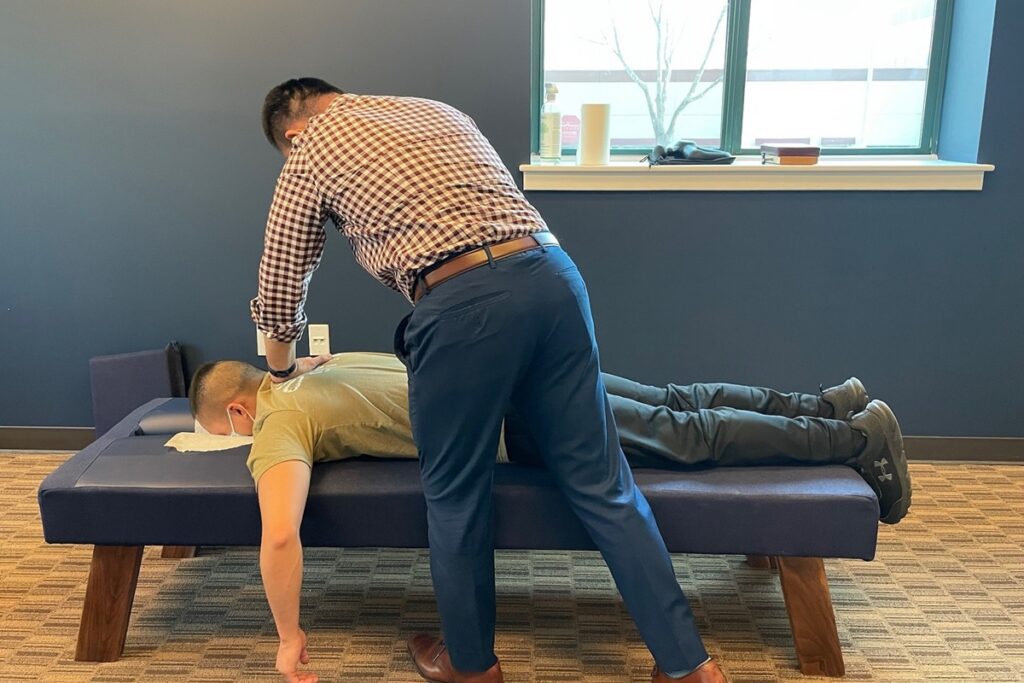
As your local chiropractor, I want to share how chiropractic care can be an effective solution for easing upper back pain by focusing on the root causes of musculoskeletal issues. When you come to my office, I'll conduct a comprehensive assessment to pinpoint any misalignments or restrictions in your spine and the surrounding muscles.
Through specific adjustments and manipulative techniques, I aim to restore proper alignment, enhance mobility, and alleviate discomfort.
Here are some important benefits of chiropractic care for upper back pain that you should know:
- Pain Relief: Chiropractic adjustments are designed to significantly lower your pain levels, enabling you to participate in daily activities without the burden of discomfort.
- Improved Posture: Consistent chiropractic treatments can help correct postural imbalances that often lead to upper back pain, making it easier for you to maintain proper posture throughout your day.
- Increased Range of Motion: By restoring flexibility and movement in your spine, chiropractic care makes it easier for you to move freely and comfortably.
- Personalized Treatment Plans: I'll create a customized treatment plan tailored specifically to your needs, addressing your unique concerns and health goals.
- Holistic Approach: In addition to spinal adjustments, I believe in a holistic approach that may include exercises and lifestyle advice to support your overall well-being and enhance your healing process.
If you're experiencing upper back pain, I encourage you to consider the benefits of chiropractic care. Together, we can work towards restoring your health and improving your quality of life.
Acupuncture Benefits
If you're dealing with upper back pain and looking for natural relief, I'd like to introduce you to acupuncture as a complementary approach to chiropractic care. Acupuncture is an ancient healing practice that involves inserting thin needles into specific points on your body. This technique helps to stimulate energy flow, promoting healing and overall wellness.
Many of my patients have found that acupuncture significantly reduces pain and enhances mobility, making it a valuable addition to their pain management strategies. One of the key benefits of acupuncture is its ability to release endorphins, which are your body's natural painkillers. This release can provide immediate relief from discomfort and promote a sense of relaxation.
Additionally, acupuncture is effective in relieving muscle tension, a common contributor to upper back pain. By targeting these tight muscles, acupuncture not only helps you relax but also improves blood circulation in the affected areas.
What sets acupuncture apart is its focus on addressing the root causes of pain rather than merely masking the symptoms. By balancing the energy flow in your body, acupuncture can help identify and treat underlying issues that may be causing your discomfort. This holistic approach can lead to longer-lasting relief from upper back pain.
Furthermore, acupuncture is generally safe when performed by a trained professional, making it a low-risk treatment option compared to more invasive procedures.
If you're interested in exploring natural healing methods for your upper back pain, I encourage you to consider acupuncture as part of your journey toward wellness. You might discover the relief you've been seeking and enhance the benefits of your chiropractic care.
Conclusion
As a local chiropractor, I want to share with you some effective techniques for alleviating upper back pain and enhancing your overall well-being. By incorporating these 10 methods into your routine, you can significantly ease discomfort and promote better spinal health.
First and foremost, regular stretching and strengthening exercises are crucial. They help support your muscles and improve flexibility, creating a more stable environment for your spine. Additionally, making ergonomic adjustments in your workspace, such as proper chair height and desk setup, can prevent strain on your upper back.
Stress management is another vital aspect of your health. High stress levels can lead to muscle tension, contributing to pain. Techniques such as deep breathing, meditation, or yoga can help alleviate this tension.
Exploring natural therapies, such as chiropractic care, can also be highly beneficial. Chiropractic adjustments can realign the spine, relieve pressure on nerves, and restore your body's natural function. Acupuncture is another alternative therapy that can help reduce pain and promote healing.
Lastly, don't underestimate the importance of restorative sleep. Quality sleep is essential for recovery and overall health.
By prioritizing these techniques and taking charge of your health, you'll be on the path to feeling the relief and comfort you deserve. Remember, you don't have to navigate this journey alone; I'm here to guide you every step of the way!