If you come home from work every evening with a stiff, aching back, you are far from alone. Back pain after a long workday is one of the most common complaints we hear at Resilience Chiropractic here in San Leandro, CA. Whether you spend your day sitting at a desk, standing on a hard floor, lifting heavy objects, or constantly moving between tasks, your spine takes on a significant amount of stress over the course of the day. The good news is that work-related back pain is often very manageable — especially when you understand what is causing it and take the right steps toward relief.
This article is designed to walk you through the most common reasons your back hurts after work, what those symptoms might mean, and how chiropractic care can play a meaningful role in helping you feel better and stay that way.
What Is Back Pain After Work?
So, what exactly is work-related back pain? Work-related back pain refers to discomfort, stiffness, or achiness in the upper, middle, or lower back that develops or worsens as a result of occupational activities or postures. It may come on gradually over weeks and months, or it may feel worse after a particularly demanding shift. It is not a specific diagnosis — rather, it is a symptom pattern linked to the physical demands and posture habits of your workday.
Common Causes of Back Pain After Work
Back pain after a workday rarely has just one cause. Most of the time, it results from a combination of factors that build up over hours, days, and even years. Dr. Ernest Luong at Resilience Chiropractic in San Leandro sees this pattern regularly — patients who have been quietly compensating for poor ergonomics, repetitive movements, or chronic muscle tension without realizing the cumulative toll it is taking on their spine.
One of the most frequent culprits is prolonged sitting. When you sit for long stretches without movement, the muscles that support your lower back — particularly the hip flexors and lumbar extensors — become either overstretched or shortened and tight. This creates imbalance throughout the pelvis and spine, which often manifests as a dull, persistent ache by the time you clock out for the day.
Prolonged standing is equally problematic. Workers in retail, healthcare, manufacturing, and food service often stand on hard floors for hours at a time. This places sustained compressive force on the lumbar discs and facet joints. Over time, this kind of loading without adequate movement or support can wear down the structures that keep your spine healthy.
Repetitive movements — such as bending, twisting, reaching overhead, or carrying loads — also stress the spine in ways that accumulate over a shift. Even movements that seem harmless in isolation can lead to micro-strain in muscles and connective tissue when they are done repeatedly, hour after hour, without sufficient recovery.
Poor workstation ergonomics is another major contributor, especially in office-based environments. A monitor that sits too low, a chair that does not support the lumbar curve, or a keyboard positioned at the wrong height can all silently force your spine into awkward positions that strain the muscles and joints supporting it.
Signs and Symptoms to Watch For
Back pain after work can show up in many different ways, and learning to recognize the patterns can help you communicate more effectively with your care provider. The most common presentation is a dull, generalized ache in the lower back that tends to come on gradually throughout the day and peaks by the time you get home. You might notice that it improves after lying down or resting, only to return the next workday.
Some people experience tightness and stiffness rather than sharp pain — a sensation of being “locked up” in the low back or mid-back that makes it difficult to stand fully upright right away. This is particularly common in people who sit for long hours. Others describe a burning sensation along one side of the back or a feeling that their muscles are constantly bracing or guarding.
Pain that radiates down one or both legs, accompanied by numbness, tingling, or weakness, deserves closer attention. This kind of radiating discomfort — often called sciatica — can indicate pressure on a spinal nerve root and should be evaluated by a qualified professional. At Resilience Chiropractic in San Leandro, CA, Dr. Ernest Luong performs thorough assessments to determine whether symptoms like these have a spinal origin and whether conservative chiropractic care is the right approach.
It is also worth paying attention to whether your back pain is symmetrical or one-sided, whether it changes with position, and whether it is accompanied by any other symptoms. These details help distinguish simple muscular strain from something that may need a different kind of care.
How Your Work Environment Affects Your Spine
Your spine is a dynamic structure. It is built to move, absorb shock, and adapt. But it is not built to be held in the same position for eight or more hours a day, nor is it designed to repetitively perform the same asymmetrical task thousands of times without rest. Modern work environments, whether sedentary or physically demanding, often challenge the spine in ways it was never intended to handle.
When you sit at a desk with poor posture, for example, the natural inward curve of your lower back — the lumbar lordosis — tends to flatten out. This shifts the loading of the spine away from where it is most efficiently managed and increases strain on the discs, ligaments, and surrounding muscles. Over hours of sustained sitting, those tissues become fatigued and painful.
In physically demanding jobs, the challenge is different but equally real. Repetitive lifting, especially with a forward-bent or twisted posture, is one of the leading causes of lumbar disc injury. Even in jobs where the lifting itself is not extreme, doing it consistently without adequate recovery time or proper mechanics can lead to cumulative strain that shows up as back pain after work.
Stress and mental tension also play a meaningful role. Many patients are surprised to learn that psychological stress commonly manifests as physical tension in the neck, shoulders, and back. If your job is mentally demanding or emotionally taxing, your body may carry that stress in your musculature, contributing to the soreness you feel at the end of the day.
How Chiropractic Care Can Help
Chiropractic care offers a conservative, drug-free, hands-on approach to addressing work-related back pain. Rather than masking symptoms with medication, chiropractic focuses on identifying and addressing the underlying mechanical issues that are contributing to your pain. This includes spinal joint function, muscle balance, and posture patterns that may be driving your discomfort.
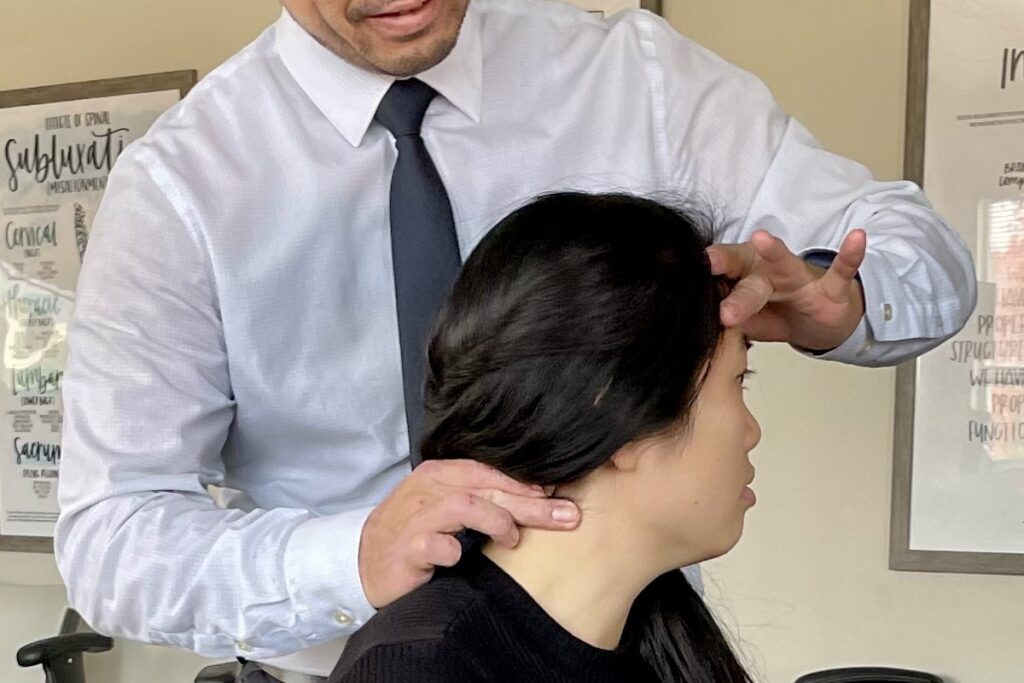
At Resilience Chiropractic in San Leandro, Dr. Ernest Luong begins with a thorough evaluation of your spine, posture, range of motion, and the specifics of your work environment. This helps build a clear picture of what is happening in your body and what kind of care is most appropriate for your situation.
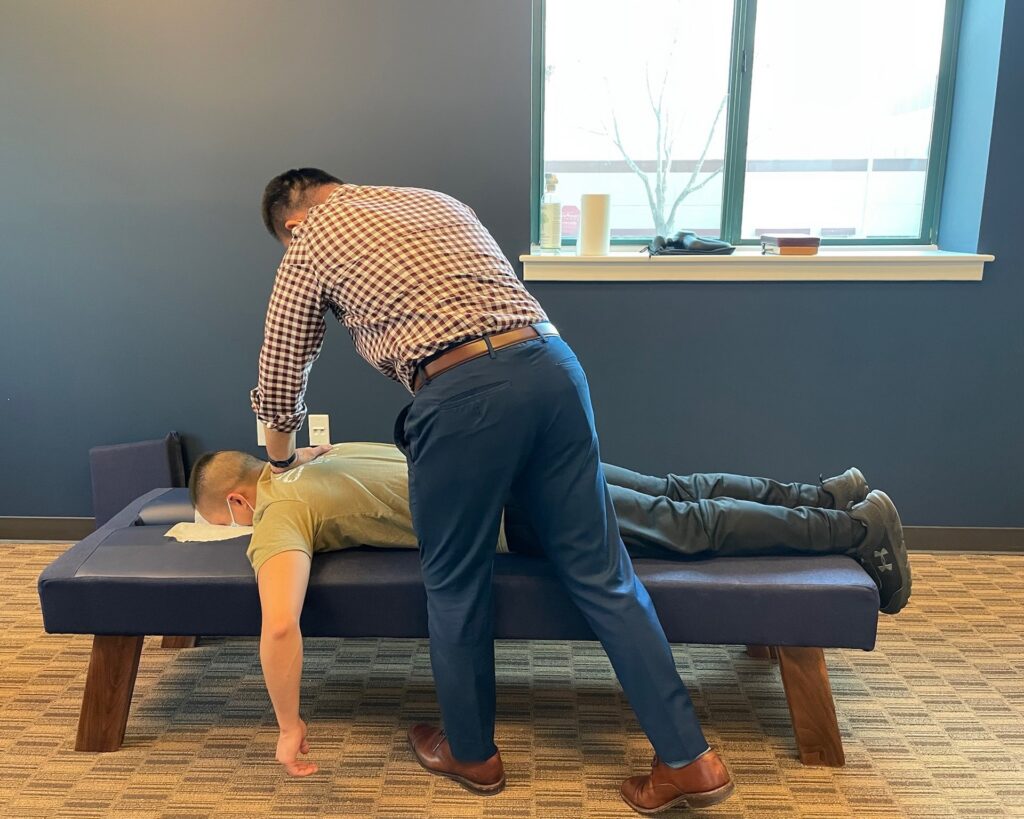
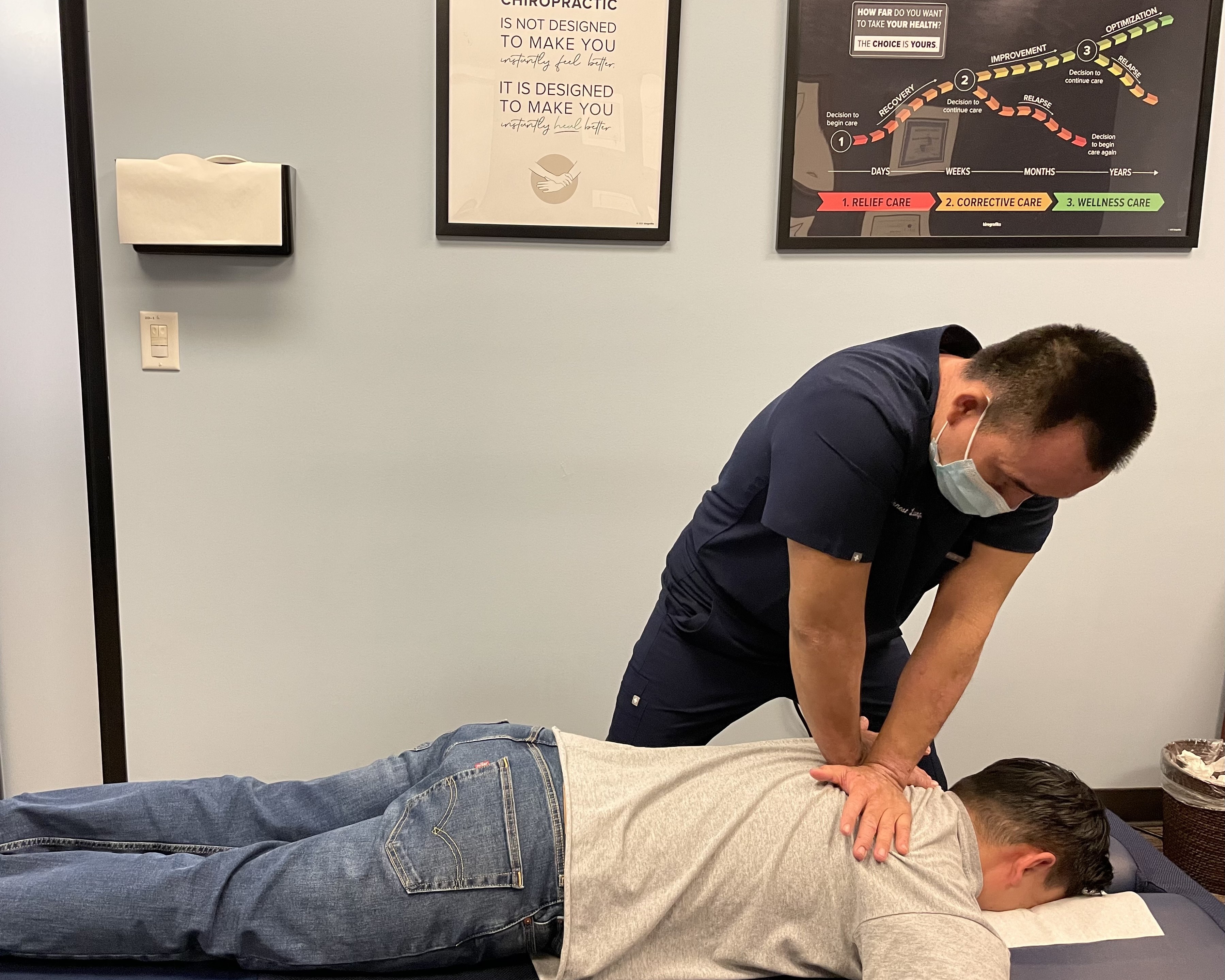
Chiropractic adjustments — also known as spinal manipulation — are gentle, controlled movements applied to the joints of the spine to help restore normal motion and reduce pain signals. Evidence from organizations like the American College of Physicians and the National Institutes of Health supports spinal manipulation as a reasonable first-line approach for many types of acute and chronic low back pain.
Beyond adjustments, a comprehensive care plan might include soft tissue work to address tight or overworked muscles, corrective exercises to strengthen the muscles that support the spine, and ergonomic coaching to help you modify how you work. The goal is not just to help you feel better today — it is to give you the tools to prevent the pain from coming back tomorrow.
Practical Tips for Relief and Prevention
While professional care is often the most effective starting point, there are meaningful steps you can take on your own to reduce back pain after work. Small, consistent changes to how you move and position yourself throughout the day can make a real difference over time.
Movement breaks are one of the most powerful things you can do. If you sit for work, aim to stand up and walk for at least a minute or two every 30 to 45 minutes. Simply changing your position and allowing your hip flexors and back muscles to reset can significantly reduce end-of-day fatigue in the spine. Set a timer if you need the reminder.
Pay attention to your workstation setup. Your monitor should be at roughly eye level, your chair should support the natural curve of your lower back, and your feet should rest comfortably on the floor or a footrest. These adjustments reduce the chronic postural strain that accumulates quietly throughout the day.
For those who stand for work, anti-fatigue matting can make a meaningful difference. Shifting your weight, using a footrest to alternate which foot bears more load, and wearing supportive footwear all help reduce compressive forces on the lumbar spine.
Gentle movement and light stretching at the end of the workday can also be helpful. Bringing your knees to your chest while lying on your back, performing a gentle seated forward fold, or doing a supported child’s pose are all low-risk ways to give your back muscles a chance to release some of the tension built up over the day.
When to See a Chiropractor
Many people wait too long before seeking help for back pain after work, assuming it will resolve on its own. And while mild discomfort that resolves quickly after rest is usually not an emergency, there are several signs that suggest it is time to get a professional evaluation.
If your back pain is affecting your ability to sleep, limiting your activities outside of work, or worsening progressively over weeks, that is a clear signal that something needs attention. Similarly, if over-the-counter pain relievers are becoming a daily habit just to get through your shift, that is worth addressing at the root rather than continuing to manage with medication alone.
Pain that radiates into your leg, causes numbness or tingling, or is associated with bladder or bowel changes should be evaluated promptly. The latter, while uncommon, may indicate a condition called cauda equina syndrome, which requires urgent medical attention — not chiropractic care. It is important to know the difference.
For most people with work-related back pain, a consultation with Dr. Ernest Luong at Resilience Chiropractic in San Leandro is a great first step. Chiropractic care is non-invasive, does not require a referral in California, and is well-suited for early intervention before pain becomes chronic.
Back Pain Triggers and Workplace Fixes
|
Common Workplace Trigger |
Why It Causes Back Pain |
Practical Fix |
|---|---|---|
|
Prolonged sitting without breaks |
Flattens lumbar curve, fatigues spinal muscles |
Stand and walk for 1-2 minutes every 30-45 minutes |
|
Monitor positioned too low |
Promotes forward head posture and upper back strain |
Raise monitor to eye level with a stand or mount |
|
Standing on hard floors all day |
Compresses lumbar discs and facet joints |
Use anti-fatigue mat and supportive footwear |
|
Repetitive bending and lifting |
Strains lumbar discs and surrounding muscles |
Use proper lifting mechanics; build in rest periods |
|
Chair without lumbar support |
Forces spine into flexed, unsupported position |
Add a lumbar cushion or adjust chair lumbar support |
|
Carrying bags on one shoulder |
Creates spinal asymmetry and lateral muscle strain |
Switch to a backpack or alternate shoulders regularly |
Myths vs. Facts About Work-Related Back Pain
Myth: Rest is the best treatment for back pain after work.
Fact: While a brief period of rest may help during acute flare-ups, prolonged bed rest is generally not recommended for back pain. Research consistently shows that staying gently active and maintaining movement leads to better outcomes than extended rest. Your spine needs movement to stay healthy.
Myth: Only physically demanding jobs cause work-related back pain.
Fact: Desk workers are just as susceptible to back pain as laborers — sometimes more so. Sustained static postures and prolonged sitting can be just as harmful as heavy lifting when it comes to cumulative spinal strain. The cause is different, but the result can be equally painful.
Myth: If the pain goes away on weekends, it is not serious.
Fact: Pain that reliably returns each workweek and improves on days off is a clear signal that your work environment or posture habits are the source of the problem. Ignoring this pattern often leads to the pain becoming more persistent and harder to resolve over time.
Myth: Chiropractic adjustments are dangerous for back pain.
Fact: Chiropractic adjustments performed by a licensed chiropractor are considered safe and evidence-based for most common types of back pain. Organizations like the American College of Physicians include spinal manipulation among their recommended first-line treatments for low back pain. As with any healthcare intervention, a thorough evaluation is always conducted first to ensure it is appropriate.
Myth: You just have to live with back pain if your job requires it.
Fact: Work-related back pain is not an inevitable consequence of having a demanding job. Many people significantly reduce or eliminate their symptoms through a combination of ergonomic adjustments, corrective exercise, and conservative care like chiropractic. You do not have to simply accept chronic pain as part of your work life.
Final Thoughts from Resilience Chiropractic in San Leandro
Back pain after work is incredibly common, but it does not have to be your new normal. Here in San Leandro, the team at Resilience Chiropractic genuinely cares about helping members of our community understand their bodies, address the root causes of their discomfort, and get back to living without pain limiting what they can do.
Dr. Ernest Luong takes a thorough, personalized approach to every patient who walks through the door. Whether you are a warehouse worker with a strained lower back, an office professional dealing with chronic tightness, or a healthcare worker who spends long shifts on your feet, your situation is unique and deserves individualized attention.
If you have been brushing off your end-of-day back pain as just part of the job, we encourage you to take it seriously. Early intervention is almost always more effective — and less complicated — than waiting until the pain becomes chronic. Resilience Chiropractic is here in San Leandro, CA to help you take that first step with confidence.
Frequently Asked Questions
Is it normal for my back to hurt every day after work?
While it is extremely common, daily back pain after work is not something you should consider normal or simply accept. It usually indicates that your body is being placed under repetitive stress without adequate recovery or support. A chiropractic evaluation can help identify what is driving the pattern.
How long does work-related back pain take to go away?
This depends on the cause, duration, and severity of the pain, as well as the steps taken to address it. Mild muscular strain related to a single workday may resolve within a few days with rest and movement. Chronic work-related pain that has been building for months typically requires a more structured approach to fully resolve.
Can a chiropractor help with back pain caused by sitting all day?
Yes, chiropractic care is commonly used to address back pain associated with prolonged sitting and desk work. Dr. Ernest Luong at Resilience Chiropractic in San Leandro evaluates spinal joint function, posture, and muscle imbalances that are often at the root of this type of pain and develops a care plan accordingly.
Should I stretch before or after work to prevent back pain?
Both can be beneficial, but the timing matters less than consistency. Light movement and gentle stretching before a shift can help prepare your body for the demands of the day, while end-of-day movement can help release accumulated tension. Talk with a chiropractor to find out which specific movements make sense for your situation.
What is the difference between a muscle strain and a disc injury?
Muscle strains typically present as localized soreness that improves with rest and gentle movement. Disc injuries often involve sharper or more intense pain, may radiate down the leg, and can worsen with specific movements like bending or coughing. A proper clinical evaluation — including orthopedic testing — is the best way to distinguish between the two.
Do I need a referral to see a chiropractor in California?
No, you do not need a referral to see a chiropractor in California. Chiropractors are primary care providers for musculoskeletal conditions and can evaluate and treat you directly. This makes it easy to seek help for back pain after work without navigating a lengthy referral process.
TL;DR Summary
-
Back pain after work is most commonly caused by prolonged sitting or standing, poor ergonomics, repetitive movements, and muscular fatigue accumulated throughout the day.
-
Symptoms range from dull aching and stiffness to radiating leg pain — patterns that worsen through the week and ease on days off are a clear signal the workplace is involved.
-
Chiropractic care, including spinal adjustments and corrective exercise, is a well-supported, drug-free approach to addressing work-related back pain at its source.
-
Simple workplace changes — movement breaks, improved ergonomics, and proper lifting mechanics — can significantly reduce back pain over time.
-
Dr. Ernest Luong at Resilience Chiropractic in San Leandro, CA offers personalized evaluations to help workers of all kinds get to the bottom of their back pain and find lasting relief.