If you’ve ever felt a sudden, sharp pain shoot down your leg or experienced unexplained numbness in your arm, there’s a good chance a herniated disc may be involved. It’s one of the most common — and most misunderstood — spinal conditions we see at Resilience Chiropractic in San Leandro, CA. Understanding what causes a herniated disc can help you take smarter steps toward relief and prevention, rather than just waiting for the pain to pass on its own.
What is a herniated disc? A herniated disc occurs when the soft, gel-like center of a spinal disc pushes through a crack in its tougher outer layer, potentially irritating nearby nerves. This can happen in the neck, mid-back, or lower back, and it often causes pain, numbness, or weakness that radiates into the arms or legs.
- Understanding Your Spinal Discs
- What Causes a Herniated Disc?
- Signs and Symptoms to Watch For
- How Chiropractic Care Fits In
- Practical Tips to Protect Your Spine
- When to See a Chiropractor
- Common Causes vs. Contributing Factors
- Myths vs. Facts About Herniated Discs
- Final Thoughts
- Frequently Asked Questions
- TL;DR Summary
Understanding Your Spinal Discs
Before we can talk about what causes a herniated disc, it helps to understand what a spinal disc actually is and what it does. Think of your spinal discs as small shock absorbers sitting between each vertebra in your spine. They give your spine flexibility, cushion impact from daily movement, and help distribute the load placed on your back throughout the day.
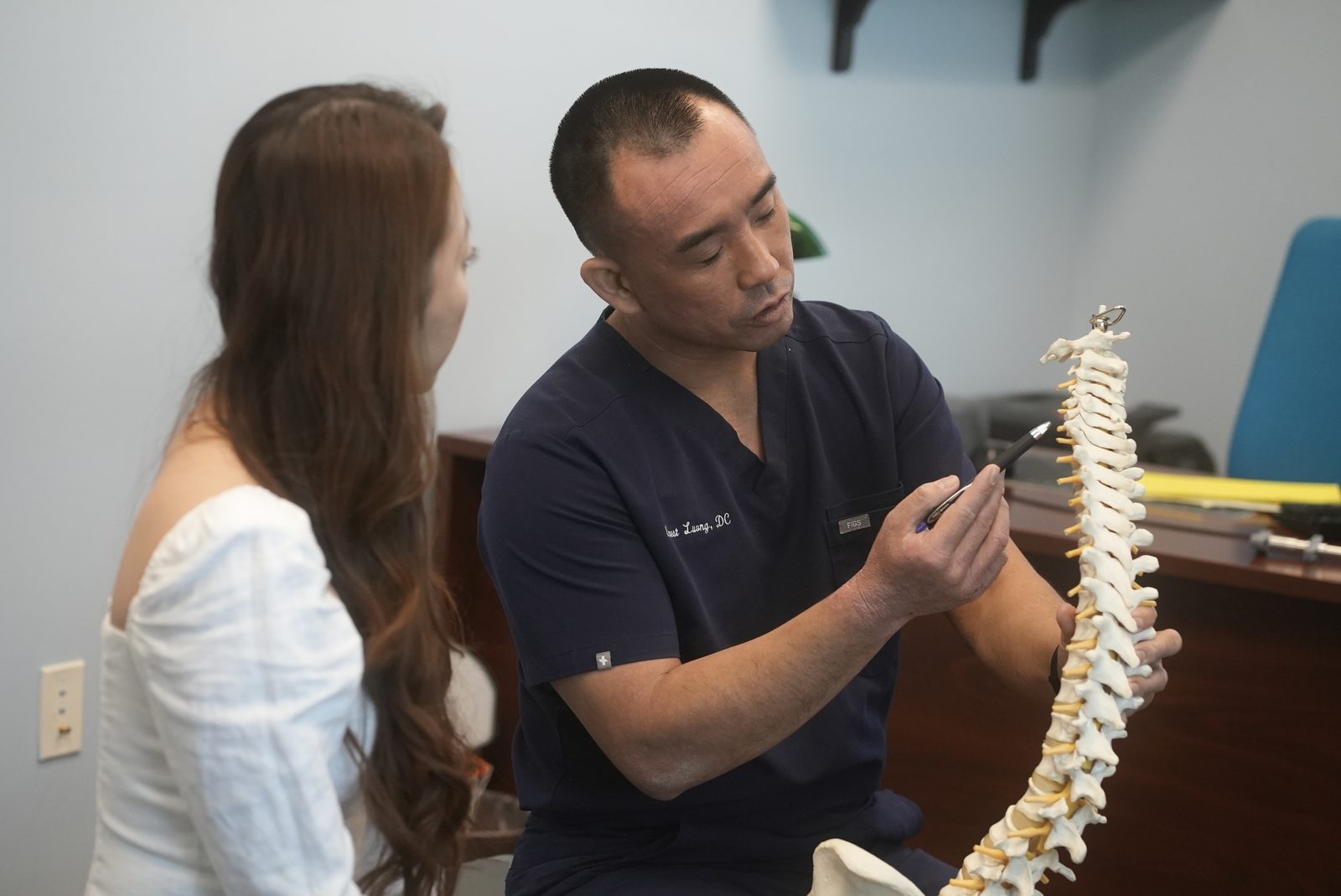
Each disc has two main parts. The outer layer is called the annulus fibrosus — a tough, fibrous ring that gives the disc its structure. Inside that ring is the nucleus pulposus, a softer, jelly-like material that provides the cushioning effect. When everything is functioning normally, this design allows you to bend, twist, and move without pain.
Problems arise when that outer ring weakens, tears, or cracks — and the soft inner material begins to push through. That’s a herniation. Depending on where it occurs along the spine and how far the disc material has shifted, it may or may not press on a spinal nerve. When it does, that’s when pain, tingling, and weakness can develop in unexpected areas of the body.
Here in San Leandro, Dr. Ernest Luong sees patients dealing with disc-related pain on a regular basis. Many of them are surprised to learn that the pain they feel in their leg or foot actually originates in their lower back — a clear sign that a herniated disc may be affecting nearby nerve roots.
What Causes a Herniated Disc?
So, what causes a herniated disc? The honest answer is: usually a combination of factors. It’s rarely just one moment or one movement that creates the problem. Instead, disc herniations tend to develop over time, with a single incident — like lifting something heavy — serving as the final trigger after months or years of gradual wear.
Age-Related Disc Degeneration
As we get older, our spinal discs naturally lose water content and become less flexible. This process, known as disc degeneration, makes the discs more prone to cracking and herniation even under normal stress. It’s one of the most common underlying reasons why herniated discs occur more frequently in people between the ages of 30 and 50. The discs simply aren’t as resilient as they once were, and the outer ring becomes more vulnerable.
Improper Lifting Mechanics
One of the most frequent triggers for a herniated disc is lifting a heavy object with poor form. When you bend at the waist and twist while lifting — instead of using your legs to power the movement — the load placed on your lumbar discs increases dramatically. This spike in pressure can cause the inner disc material to push outward, especially if the disc was already weakened by degeneration. Dr. Ernest Luong often reminds patients that proper body mechanics aren’t just gym advice — they matter every time you pick something up, whether it’s a box at work or a bag of groceries.
Repetitive Strain and Overuse
Repeated movements — especially those involving bending, twisting, or prolonged sitting — can gradually stress the outer disc wall until it gives way. Many of the patients at Resilience Chiropractic in San Leandro work jobs that involve long hours at a desk, frequent driving, or physically demanding repetitive tasks. All of these can contribute to the slow breakdown of disc integrity over time. If you’ve been experiencing back pain after work, repetitive strain on your discs may be part of what’s going on.
Traumatic Injury
A sudden trauma — such as a fall, a car accident, or a sports injury — can cause immediate disc herniation. The force involved in these events can compress the spine rapidly and forcefully enough to rupture the disc wall on impact. This is why auto injury chiropractic care is such an important service for accident victims. People often walk away from a collision feeling relatively okay, only to develop significant disc-related symptoms in the days or weeks that follow.
Sedentary Lifestyle and Weak Core Muscles
When the muscles surrounding the spine — particularly the core — are weak or underdeveloped, the spinal discs are forced to bear more load than they should. A sedentary lifestyle reduces muscular support and can lead to poor posture, both of which increase stress on the discs over time. Staying active and building core strength is one of the most effective long-term strategies for protecting your spine.
Genetics and Body Weight
There is evidence suggesting that genetics can play a role in how susceptible a person is to disc herniation. If disc problems run in your family, you may have inherited a predisposition to weaker disc material. Additionally, carrying excess body weight increases the mechanical load on your lumbar spine, which can accelerate disc wear and raise the risk of herniation.
Signs and Symptoms to Watch For
Knowing what causes a herniated disc is only part of the picture. Recognizing the symptoms is equally important, especially since they can vary quite a bit depending on where the herniation occurs and whether it’s pressing on a nerve.
In the lower back, a herniated disc frequently causes pain that radiates down one leg — a pattern often referred to as sciatica. You may also experience numbness, tingling, or weakness in the leg or foot. If you’re noticing these symptoms, our sciatica treatment page offers more detail on how this condition presents and how it can be addressed conservatively.
In the cervical spine (neck), a herniated disc can cause pain that radiates into the shoulder, arm, or hand. You might notice a burning sensation, reduced grip strength, or difficulty with certain movements. These symptoms can sometimes be confused with shoulder or arm injuries, which is why a thorough evaluation is so important.
It’s also worth noting that not every herniated disc causes noticeable symptoms. Some herniations are discovered incidentally on imaging ordered for a different reason. However, when symptoms do appear — particularly if they’re worsening or affecting your daily function — it’s time to take action rather than wait and hope things improve on their own. As we’ve discussed in our article on why most people wait too long to see a chiropractor, delaying care can sometimes lead to longer recovery times.
How Chiropractic Care Fits In
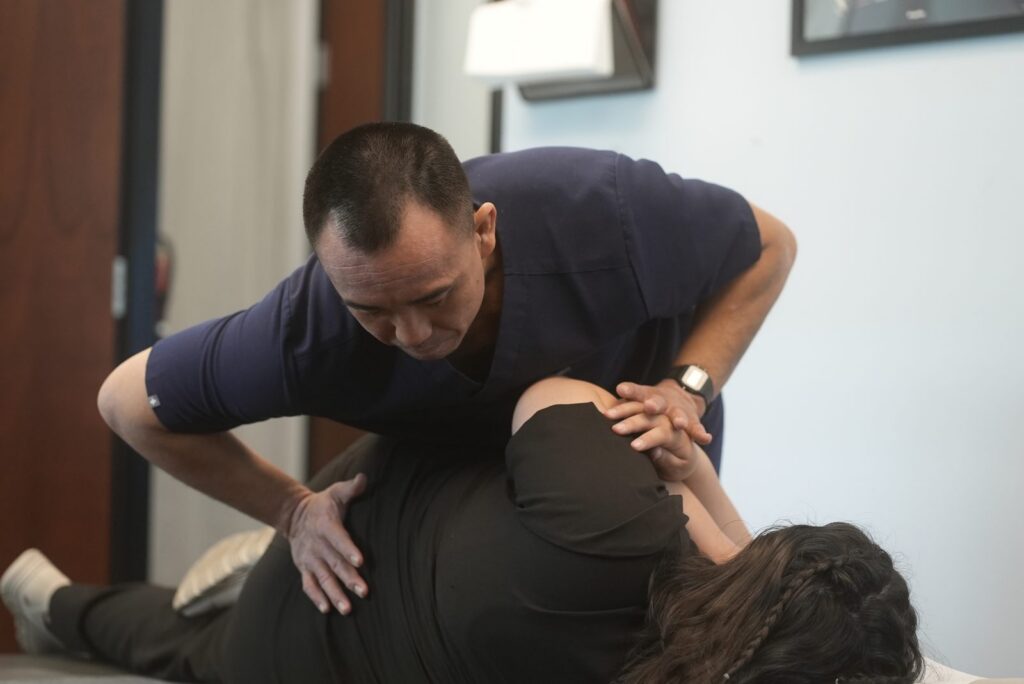
Chiropractic care offers a non-surgical, drug-free approach to managing herniated disc symptoms. At Resilience Chiropractic in San Leandro, Dr. Ernest Luong focuses on evaluating the whole spine and nervous system to identify where the disc issue is occurring and how it’s affecting surrounding structures. The goal isn’t just to reduce pain temporarily — it’s to restore function and address contributing factors so the problem is less likely to return.
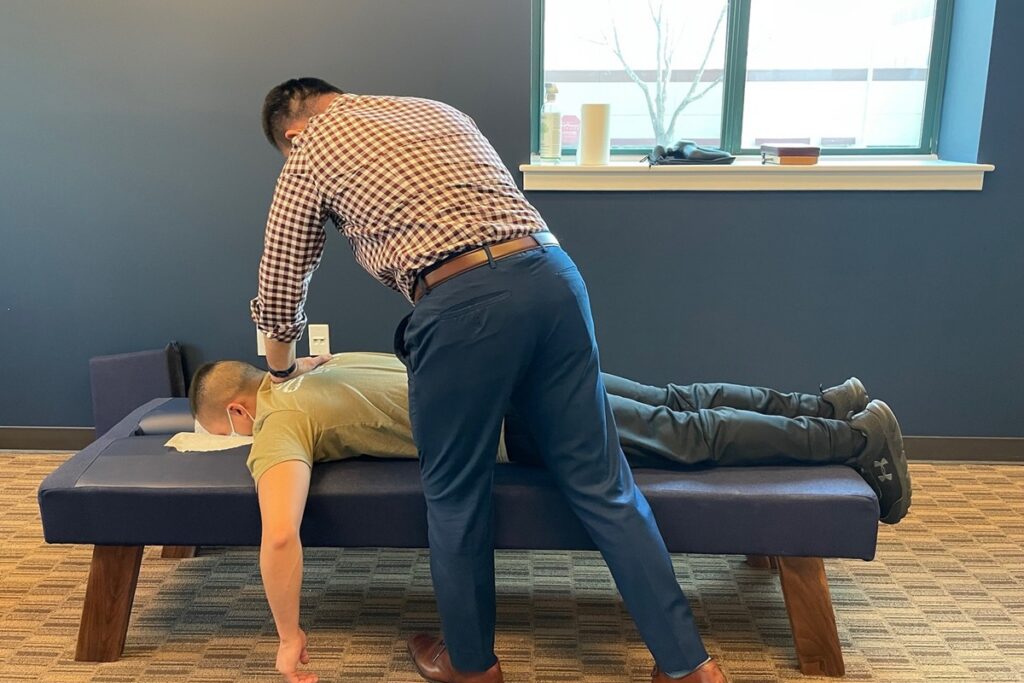
Chiropractic adjustments can help reduce the mechanical stress placed on affected discs, improve spinal alignment, and restore more normal movement patterns. When the vertebrae around a herniated disc are misaligned or restricted, they can put uneven pressure on the disc and the surrounding nerves. Careful, specific adjustments can help relieve that pressure gradually.
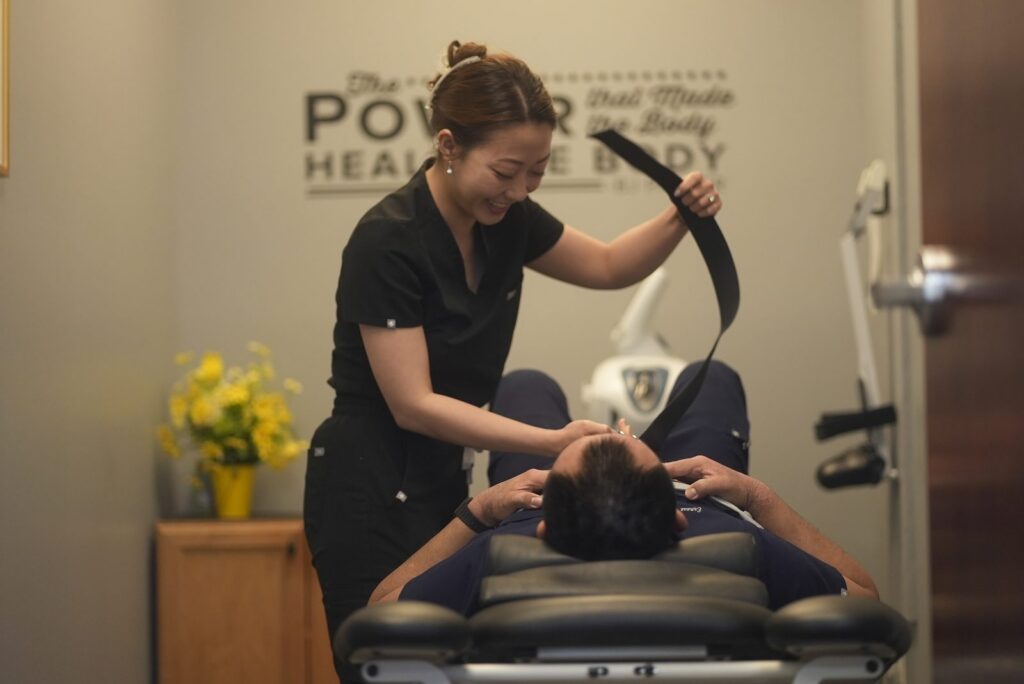
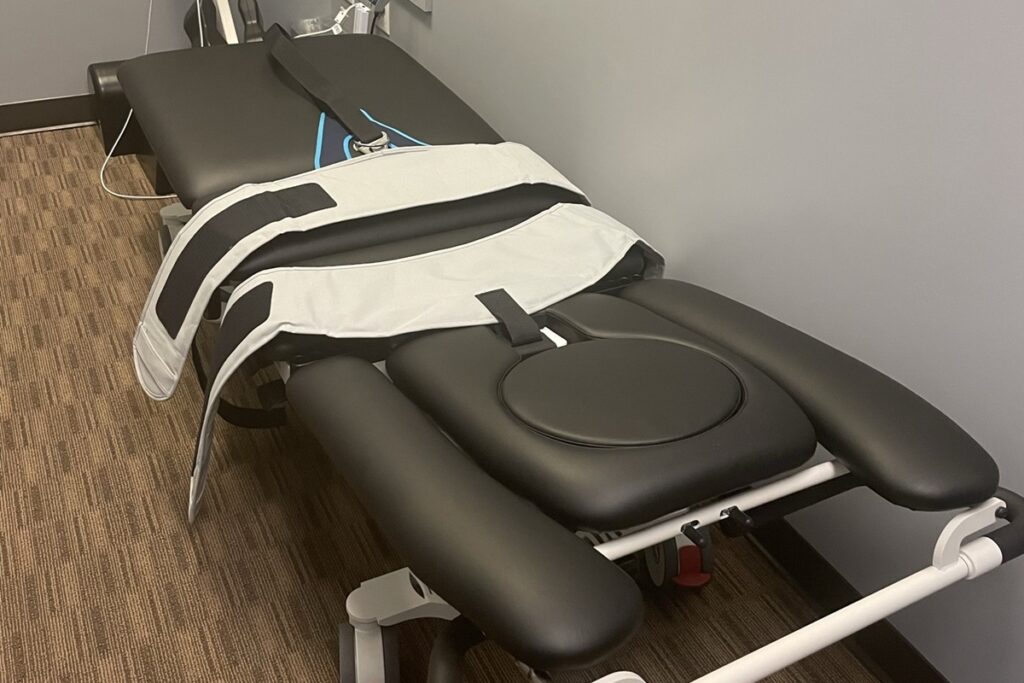
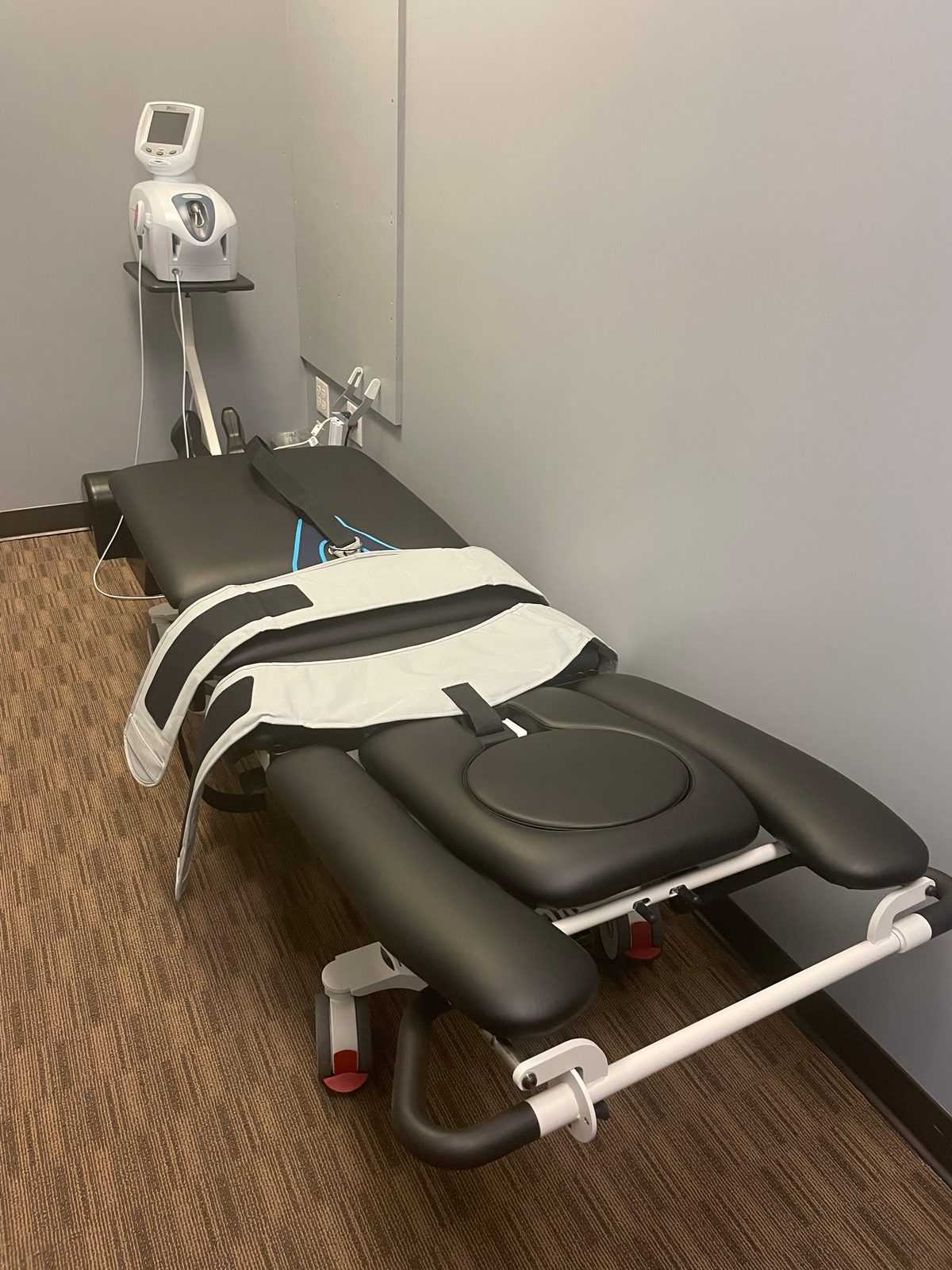
In addition to adjustments, spinal decompression therapy is another tool that can be highly beneficial for disc herniations. This gentle, traction-based treatment creates a negative pressure within the disc space, which may help draw the herniated material back toward the center and promote the flow of nutrients into the disc. Many patients in San Leandro have found significant relief through this approach, and you can learn more about how it works in our detailed guide on how spinal decompression works to reduce pain and restore mobility.
Depending on a patient’s needs, Dr. Ernest Luong may also incorporate physical therapy into the care plan. Targeted rehabilitation exercises help strengthen the muscles that support the spine, reducing the likelihood of re-injury and improving long-term outcomes.
Practical Tips to Protect Your Spine
Whether you’re currently managing a herniated disc or hoping to prevent one, there are real, practical steps you can take every day to reduce your risk and support your spinal health.
Lift with intention. Always bend at the knees, not the waist, when picking up objects from the floor. Keep whatever you’re lifting close to your body and avoid twisting your spine during the movement. This single habit change can significantly reduce the stress placed on your lumbar discs.
Evaluate your workstation. If you spend long hours sitting at a desk, make sure your chair supports the natural curve of your lower back. Your screen should be at eye level, and your feet should rest flat on the floor. Sitting in a slouched position for hours places sustained pressure on your discs and gradually weakens the supporting muscles.
Move regularly throughout the day. The spine thrives on movement. Prolonged sitting compresses your discs and reduces their ability to absorb nutrients, which can accelerate degeneration. Even brief walks or standing breaks every 30 to 45 minutes can make a meaningful difference over time.
Build your core strength. You don’t have to do intense workouts to protect your spine. Gentle, consistent exercises that target the deep stabilizing muscles of your abdomen and back provide meaningful support for your spinal discs. Talk to Dr. Ernest Luong or the team at Resilience Chiropractic about which movements are appropriate for your current condition.
Stay hydrated. Spinal discs are largely made up of water. Proper hydration helps maintain disc height and elasticity. While it won’t reverse degeneration, it does support overall disc health as part of a broader wellness approach.
When to See a Chiropractor
If you’re experiencing back or neck pain that isn’t improving with rest after a few days, it’s worth scheduling an evaluation. This is especially true if your pain is accompanied by radiating symptoms — numbness, tingling, or weakness — that travel into your arms or legs. These are signs that a nerve may be involved, and the sooner that’s assessed, the better.
Chiropractic care is generally appropriate for mild to moderate herniated disc presentations where the symptoms are manageable and not rapidly worsening. Dr. Ernest Luong will perform a thorough evaluation to determine whether conservative care is the right fit for your situation and what type of approach is most appropriate.
However, there are certain red flags that warrant prompt medical attention rather than chiropractic care alone. These include loss of bladder or bowel control, severe progressive weakness in the legs, or signs of significant neurological compromise. In these cases, referral to a medical specialist may be necessary. A good chiropractor will always tell you when a situation is beyond the scope of conservative care — and at Resilience Chiropractic, that commitment to honest, patient-centered guidance is a core part of how the team operates.
Common Causes vs. Contributing Factors
| Direct Causes | Contributing Risk Factors |
|---|---|
| Improper lifting with spinal twisting | Age-related disc degeneration |
| Traumatic impact (car accident, fall) | Genetic predisposition to weaker discs |
| Sudden heavy exertion | Sedentary lifestyle and weak core muscles |
| Repetitive bending and twisting at work | Excess body weight increasing spinal load |
| Sports injuries with axial compression | Prolonged poor posture (especially sitting) |
| Whiplash-type cervical injuries | Smoking (reduces disc nutrition and hydration) |
Myths vs. Facts About Herniated Discs
Myth: A herniated disc always requires surgery.
Fact: The majority of herniated disc cases resolve with conservative, non-surgical care. Evidence from leading organizations including the American College of Physicians supports starting with conservative approaches — such as chiropractic care, physical therapy, and activity modification — before considering surgical intervention. Surgery is typically reserved for severe cases involving significant neurological deficits that don’t respond to conservative treatment.
Myth: If I have a herniated disc, I should rest completely and avoid all movement.
Fact: Prolonged bed rest can actually slow recovery and weaken the muscles that support your spine. While it’s important to avoid activities that sharply worsen your pain, gentle movement and guided rehabilitation are generally encouraged. Dr. Ernest Luong and the team at Resilience Chiropractic help patients find the right balance between activity and recovery.
Myth: Herniated discs only affect older people.
Fact: While age-related degeneration does increase risk, herniated discs can and do occur in younger adults — and even in teenagers in some cases. Athletes, people with physically demanding jobs, and those with poor posture habits can develop disc herniations at any age. Sports chiropractic care addresses disc-related injuries common in active individuals across all age groups.
Myth: The pain from a herniated disc will always stay in the back.
Fact: Herniated discs frequently cause referred pain, numbness, and tingling in areas far from the spine. A lumbar herniation can cause symptoms all the way down to the foot. A cervical herniation can cause pain, weakness, or tingling in the hand. Understanding this referred pain pattern is key to proper diagnosis and treatment.
Myth: Once you have a herniated disc, you’ll always be in pain.
Fact: Many people with herniated discs experience significant improvement with appropriate care. Research suggests that over time, the body can reabsorb some of the herniated disc material, and symptoms often improve with conservative treatment. While disc injuries do require thoughtful management, a life free of disabling pain is a realistic goal for most patients.
Final Thoughts
Understanding what causes a herniated disc is the first step toward getting the right help. Whether your disc issue developed gradually from years of desk work and poor posture, or more suddenly from a sports injury or car accident, the important thing is knowing that conservative care options exist and that you don’t have to manage this alone.
At Resilience Chiropractic in San Leandro, CA, Dr. Ernest Luong is committed to helping patients in our community understand their spinal health and take meaningful steps toward lasting relief. If you’re dealing with back pain, neck pain, radiating leg symptoms, or any of the signs we’ve discussed in this article, we’d love the opportunity to evaluate your situation and talk through your options. You can explore more about our approach to herniated disc treatment and see whether chiropractic care may be the right fit for you. The San Leandro community deserves access to honest, thorough, and compassionate care — and that’s exactly what we aim to provide every day.
Frequently Asked Questions
Can a herniated disc heal on its own?
In many cases, yes — at least partially. The body has some capacity to reabsorb herniated disc material over time, and symptoms often improve with conservative care and activity modification. However, the underlying disc degeneration doesn’t fully reverse, which is why addressing contributing factors and supporting spinal health long-term is so important.
How do I know if my back pain is from a herniated disc or something else?
A herniated disc often causes pain that radiates into the leg or arm, along with numbness or tingling along a specific nerve pathway. Muscle strains tend to be more localized. A proper evaluation — including orthopedic and neurological testing — is the most reliable way to determine the source of your pain. Imaging such as MRI can confirm a diagnosis when needed.
Is chiropractic care safe for a herniated disc?
For most patients with herniated discs, chiropractic care is considered a safe, non-invasive treatment option. Dr. Ernest Luong performs a thorough assessment before beginning any care to ensure the approach is appropriate for your specific condition. Techniques are adapted based on the severity and location of the herniation.
What is the difference between a herniated disc and a bulging disc?
A bulging disc occurs when the outer disc wall weakens and extends outward without breaking — think of it like a slightly deflated tire. A herniated disc involves an actual tear in the outer wall, through which the inner material has pushed. Both can cause nerve irritation, but herniations are generally considered more significant and may cause more acute symptoms.
Can sciatica be caused by a herniated disc?
Yes — a herniated disc in the lower back is one of the most common causes of sciatica. When the herniated material presses on the sciatic nerve root, it can cause the characteristic shooting pain, tingling, and numbness that travels from the lower back through the buttock and down the leg. Our guide on what causes sciatica covers this connection in more detail.
How long does recovery from a herniated disc take?
Recovery timelines vary depending on the severity of the herniation, the patient’s overall health, and how consistently they follow their care plan. Many patients begin to notice meaningful improvement within several weeks of starting conservative care. More significant herniations may take several months of consistent treatment and rehabilitation to reach full or near-full function.
TL;DR Summary
- A herniated disc occurs when the soft inner material of a spinal disc pushes through a tear in the outer wall, potentially irritating nearby nerves.
- The most common causes include age-related degeneration, improper lifting, repetitive strain, traumatic injury, weak core muscles, and excess body weight.
- Symptoms can include localized back or neck pain, along with radiating pain, numbness, or weakness in the arms or legs.
- Most herniated discs can be effectively managed with conservative care, including chiropractic adjustments, spinal decompression, and physical therapy — surgery is rarely the first step.
- If you’re experiencing disc-related symptoms in or around San Leandro, CA, Resilience Chiropractic and Dr. Ernest Luong offer thorough evaluations and personalized care plans to help you recover and protect your spine long-term.