
If you’ve ever felt a sharp, burning pain shoot down one leg — starting in your lower back and traveling all the way to your foot — there’s a good chance sciatica was to blame. It’s one of the most common complaints we see here at Resilience Chiropractic in San Leandro, CA, and it can range from mildly annoying to completely debilitating. Understanding what causes sciatica is the first step toward finding real, lasting relief. In this guide, Dr. Ernest Luong breaks down the most common causes, what sciatica actually is, and how conservative care can help you get back to living your life without constant pain.
What is sciatica? Sciatica is not a diagnosis on its own — it’s a symptom. It refers to pain, numbness, tingling, or weakness that travels along the path of the sciatic nerve, which runs from your lower back through your hips and buttocks and down each leg. The discomfort almost always affects only one side of the body.
- What Is the Sciatic Nerve?
- What Causes Sciatica? The Most Common Culprits
- Signs and Symptoms to Know
- How Chiropractic Care Fits In
- Practical Tips for Managing Sciatica at Home
- When to See a Chiropractor
What Is the Sciatic Nerve?
The sciatic nerve is the longest and widest nerve in the human body. It originates from several nerve roots in the lumbar and sacral spine — specifically levels L4 through S3 — and then merges into one large nerve that travels down through the buttock, the back of the thigh, and all the way to the foot. Because it covers so much ground, irritation or compression anywhere along its path can cause symptoms that feel far removed from the actual source of the problem.
This is why so many people in San Leandro are surprised when Dr. Ernest Luong explains that their foot tingling or calf pain is actually coming from their lower back. The sciatic nerve is like a highway — when there’s a problem at the on-ramp, you feel the effects miles down the road. Understanding this connection is key to understanding what causes sciatica and why treating the source — not just the symptoms — matters so much.
What Causes Sciatica? The Most Common Culprits
There are several well-recognized causes of sciatic nerve irritation. While each person’s situation is unique, most cases of sciatica can be traced back to one of a handful of underlying conditions affecting the lumbar spine or surrounding structures.
Herniated or Bulging Discs
This is the most frequent cause of sciatica. The discs between your vertebrae act as cushions and shock absorbers. When the inner gel-like material of a disc pushes outward — either through a tear or gradual wear — it can press directly on the nearby nerve roots that form the sciatic nerve. Even a small amount of pressure can produce intense pain, burning, or weakness down the leg. If you’re dealing with this specific issue, our herniated disc treatment page offers more detailed information on how we approach it here at Resilience Chiropractic.
Spinal Stenosis
Spinal stenosis refers to a narrowing of the spinal canal — the channel that houses the spinal cord and nerve roots. When this space narrows, it can compress the nerves that exit the spine, including those that form the sciatic nerve. This condition is more common in adults over 50 and often develops gradually due to age-related changes in the spine, including bone spurs and thickened ligaments.
Piriformis Syndrome
The piriformis is a small muscle located deep in the buttock. In most people, the sciatic nerve runs just beneath this muscle. But when the piriformis becomes tight, inflamed, or goes into spasm — often from prolonged sitting, overuse, or an injury — it can irritate or compress the sciatic nerve directly. This is sometimes called “wallet sciatica” because sitting on a thick wallet can create the same kind of compression. Many patients who spend long hours commuting or working at a desk in the San Leandro area are familiar with this one.
Spondylolisthesis
Spondylolisthesis occurs when one vertebra slips forward over the one below it. This can narrow the opening through which nerve roots exit the spine and place pressure on the sciatic nerve. It can result from a stress fracture, degenerative changes, or a congenital condition. Some people don’t know they have it until they start experiencing leg pain.
Degenerative Disc Disease
As we age, our spinal discs naturally lose water content and height. This degeneration can cause the disc to bulge, reduce the space available for nerve roots, and contribute to inflammation in the area. Over time, degenerative disc disease can become one of the underlying reasons what causes sciatica in older adults — though it can affect people of any age. Related structural changes sometimes overlap with other spinal conditions like scoliosis, which Dr. Ernest Luong evaluates thoroughly during patient assessments.
Muscle Imbalances and Poor Posture
Not all sciatica comes from a structural spinal problem. Sometimes, chronic poor posture, muscle imbalances, or years of repetitive movement patterns create enough stress on the lumbar region and surrounding muscles to irritate the sciatic nerve. Office workers, drivers, and people who spend hours on their feet are all at risk. These cases are often very responsive to chiropractic care and corrective exercise.
Signs and Symptoms to Know
Sciatica has a fairly recognizable pattern, though it can feel different from person to person. The classic presentation involves pain that starts in the lower back or buttock and radiates down one leg — sometimes reaching the calf, ankle, or foot. The pain itself can range from a dull ache to a sharp, electric-like jolt.
Beyond pain, many people experience tingling (often described as “pins and needles”), numbness, or muscle weakness in the affected leg or foot. Some notice that their symptoms worsen when sitting for long periods, coughing, sneezing, or bending forward. Others find that walking or lying down provides some relief. If you recognize these patterns, learning more about sciatica treatment options is a worthwhile next step.
It’s also worth noting that sciatica can sometimes be confused with other conditions. Hip pain, for example, can mimic some sciatic symptoms. Our hip pain treatment resources can help clarify the difference — and a proper evaluation is always the most reliable way to know what’s actually going on.
| Symptom / Feature | Sciatica | General Low Back Pain |
|---|---|---|
| Location of pain | Lower back, buttock, leg, possibly foot | Localized to the lower back |
| Radiating pain | Yes — often travels down one leg | Usually stays in the back |
| Tingling or numbness | Common in leg or foot | Rare |
| Muscle weakness | Possible in leg or foot | Uncommon |
| Worsened by sitting | Often yes | Sometimes |
| Side affected | Usually one side only | Can be both sides |
| Common triggers | Disc herniation, stenosis, piriformis | Muscle strain, posture, overuse |
How Chiropractic Care Fits In
Chiropractic care is one of the most well-recognized conservative, non-invasive approaches for addressing sciatica. Rather than masking the pain with medication, chiropractic focuses on identifying and addressing the underlying cause of nerve irritation — whether that’s a misaligned vertebra, a tight muscle, or a compressed disc.
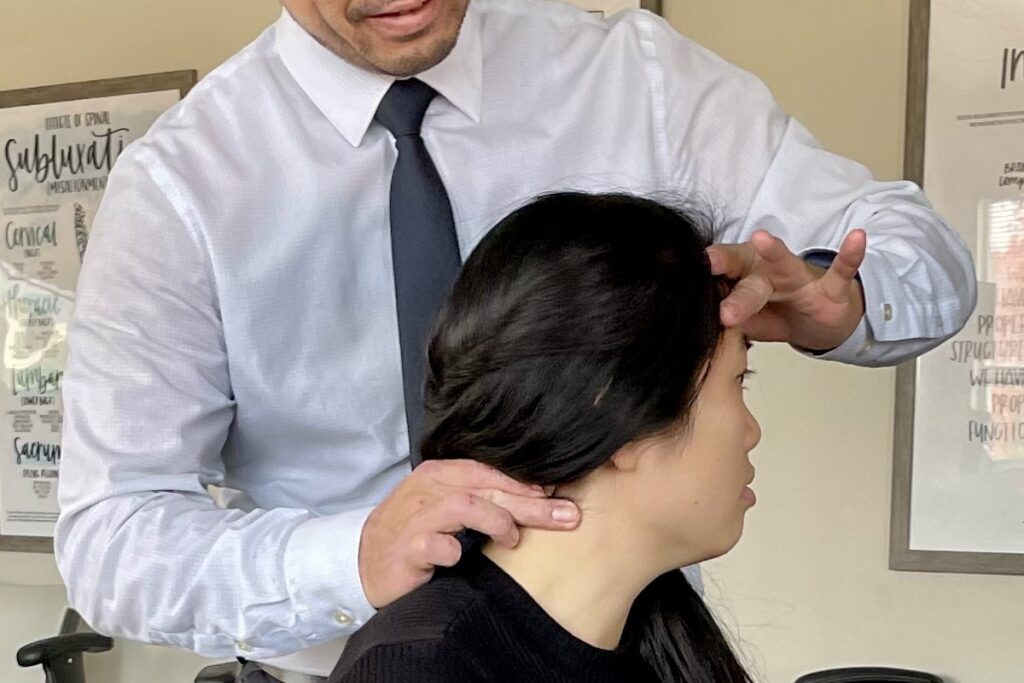
At Resilience Chiropractic in San Leandro, Dr. Ernest Luong begins with a thorough evaluation to understand exactly what’s driving your symptoms. This typically includes a postural assessment, orthopedic and neurological testing, and a review of your health history. From there, care is tailored to your specific situation.
Spinal adjustments are often a central part of care for sciatic nerve pain. By restoring proper alignment and joint mobility in the lumbar spine and pelvis, adjustments can reduce pressure on the sciatic nerve and help the body move more efficiently. Evidence from organizations like the American Chiropractic Association and published research in conservative care literature suggests that chiropractic care can be an effective option for reducing sciatica-related pain and improving function.
For patients dealing with disc-related sciatica, spinal decompression therapy may also be incorporated. This gentle, traction-based treatment helps take pressure off compressed discs and nerve roots — and many patients find it quite relieving. To understand more about how this works, our article on how spinal decompression works to reduce pain and restore mobility provides a clear breakdown.
Alongside adjustments and decompression, our team may integrate physical therapy approaches — including targeted rehabilitation exercises, soft tissue work, and movement coaching — to support long-term recovery and help prevent recurrence. The goal is always a comprehensive, individualized plan that treats you as a whole person, not just a set of symptoms.
Practical Tips for Managing Sciatica at Home
While professional care is essential for addressing the root cause of sciatica, there are some simple, safe things you can do between appointments to support your recovery and reduce discomfort.
First, pay attention to how you sit. Prolonged sitting is one of the biggest aggravators of sciatic nerve pain. If your work or lifestyle involves long hours at a desk or behind the wheel — which is common here in the San Leandro and Bay Area commuter community — try to stand and move for a few minutes every 30 to 45 minutes. Avoid crossing your legs, and make sure your chair supports your lower back properly.
Second, be mindful of how you move. Bending forward with straight legs to pick something up off the floor puts enormous strain on your lumbar discs. Instead, hinge at your hips and bend your knees. It sounds simple, but this one habit change can make a real difference over time.
Third, avoid the temptation to stay completely still. While rest is appropriate during acute flare-ups, prolonged inactivity often makes sciatic symptoms worse. Gentle movement — like short, flat walks — helps maintain circulation and reduces stiffness. Before adding any new stretches or exercises, check with Dr. Ernest Luong, since some movements that seem helpful can actually increase nerve tension in certain presentations. Our article on why stretching your hip flexors might be making your pain worse is a great example of why individualized guidance matters.
Finally, pay attention to your sleep position. Sleeping on your side with a pillow between your knees can help keep your pelvis and spine in a more neutral position overnight, which may reduce morning stiffness and pain.
When to See a Chiropractor
If you’re experiencing pain, tingling, or numbness that travels from your lower back or buttock down into your leg — even if it’s mild — it’s worth having it evaluated. Sciatica doesn’t always resolve on its own, and waiting too long can allow the underlying problem to progress. As we’ve written about before, most people wait too long to see a chiropractor, and that delay often makes recovery more complex.
You should seek care promptly if your symptoms have lasted more than a week or two without improvement, if they are worsening rather than easing, or if you notice significant muscle weakness in your leg or foot. Similarly, if you’re struggling with related issues like back pain alongside your leg symptoms, a comprehensive evaluation can address both at once.
There are certain red flags that warrant immediate medical attention rather than chiropractic care. These include loss of bladder or bowel control, sudden severe weakness in both legs, or sciatica following a significant trauma. In these cases, please contact a medical provider or emergency services right away. Dr. Ernest Luong and the team at Resilience Chiropractic will always refer out when a situation calls for it — your safety is the top priority.
Myths vs. Facts About Sciatica
Myth: Sciatica always requires surgery.
Fact: The vast majority of sciatica cases resolve with conservative care. Surgery is typically considered only after extended periods of failed non-surgical treatment. Chiropractic care, physical therapy, and lifestyle modifications help many people avoid surgical intervention altogether.
Myth: Rest is the best treatment for sciatica.
Fact: Complete bed rest is generally not recommended for sciatica. Evidence consistently supports staying gently active. Prolonged inactivity can actually worsen inflammation and muscle stiffness, making recovery harder over time.
Myth: Sciatica only affects older adults.
Fact: While age-related changes like disc degeneration and stenosis are more common in older adults, sciatica can affect people of any age. Younger individuals — including athletes and desk workers — regularly experience sciatic nerve irritation due to disc issues, muscle imbalances, or injury. Our sports chiropractic care program addresses sciatica in active patients specifically.
Myth: If the leg pain goes away, the problem is solved.
Fact: Symptom relief doesn’t always mean the underlying cause has been corrected. Without addressing the root issue — whether it’s a herniated disc, spinal misalignment, or muscle dysfunction — sciatica has a tendency to return, often more severely. This is why ongoing chiropractic wellness care can be an important part of long-term health.
Myth: Sciatica and general back pain are the same thing.
Fact: They are related but distinct. General back pain stays localized to the back. Sciatica specifically involves nerve-related symptoms — pain, tingling, numbness, or weakness — that travel down the leg along the path of the sciatic nerve. The distinction matters for proper diagnosis and treatment.
Final Thoughts from Resilience Chiropractic in San Leandro
Sciatica can feel overwhelming — especially when it interrupts your sleep, your work, and your daily routine. But the good news is that most people with sciatica do get better, and conservative care plays a meaningful role in that process. Understanding what causes sciatica gives you the power to make informed decisions about your health rather than feeling at the mercy of your symptoms.
Here at Resilience Chiropractic in San Leandro, CA, Dr. Ernest Luong is dedicated to helping our community move better, feel better, and live well — without relying on medication or surgery as the first line of defense. Whether you’re a longtime San Leandro resident dealing with a flare-up or you’ve been quietly managing leg pain for months, we’re here to help you find answers and a path forward.
If you’d like to learn more about how we approach sciatic nerve pain, visit our dedicated sciatica treatment page, or read our article on why you should see a chiropractor for sciatica. We look forward to being a trusted part of your health journey.
Frequently Asked Questions
What causes sciatica to flare up suddenly?
Sudden sciatica flare-ups are often triggered by movements that increase pressure on the sciatic nerve — such as bending forward, lifting something heavy, sneezing, or sitting for an extended period. An underlying issue like a herniated disc or piriformis tightness may already be present, and a specific movement pushes the nerve past its tolerance threshold.
Can sciatica go away on its own?
Mild cases of sciatica sometimes improve with time and basic self-care. However, if symptoms persist beyond a few weeks, worsen, or interfere with daily activities, professional evaluation is recommended. Addressing the root cause is the most reliable way to prevent recurrence.
Is walking good or bad for sciatica?
For most people, gentle walking is beneficial for sciatica. It promotes circulation, reduces inflammation, and keeps the spine and surrounding muscles mobile. Avoid walking on uneven terrain or for very long distances during an acute flare-up, and always follow the guidance of your chiropractor.
How long does sciatica typically last?
The duration varies depending on the underlying cause and how quickly care is started. Many people begin to notice improvement within a few weeks of starting conservative treatment. More complex cases involving significant disc herniation or stenosis may take longer. Early intervention generally leads to faster recovery.
Can sciatica cause leg pain without back pain?
Yes — it’s actually quite common. Some people feel all of their sciatic symptoms in the buttock, thigh, or lower leg with little to no noticeable back pain. This is why leg pain should never be dismissed without considering the spine as a potential source. Our article on surprising causes of leg pain explores this further.
Does sciatica affect both legs at the same time?
Classic sciatica typically affects only one side of the body. Symptoms in both legs simultaneously — especially combined with bladder or bowel changes — can indicate a more serious condition called cauda equina syndrome, which requires immediate emergency medical care. This presentation is uncommon, but it’s important to be aware of.
TL;DR
- Sciatica is caused by irritation or compression of the sciatic nerve, most commonly due to herniated discs, spinal stenosis, piriformis syndrome, or degenerative changes in the spine.
- Symptoms typically include pain, tingling, or numbness that radiates from the lower back or buttock down one leg — and can sometimes occur without significant back pain.
- Chiropractic care is a well-established, non-invasive option for addressing the root causes of sciatica through spinal adjustments, decompression therapy, and rehabilitative support.
- Simple lifestyle adjustments — like limiting prolonged sitting, using proper lifting mechanics, and staying gently active — can help manage symptoms between visits.
- If your symptoms have lasted more than a couple of weeks, are worsening, or include muscle weakness, Dr. Ernest Luong at Resilience Chiropractic in San Leandro, CA is ready to help you find answers.